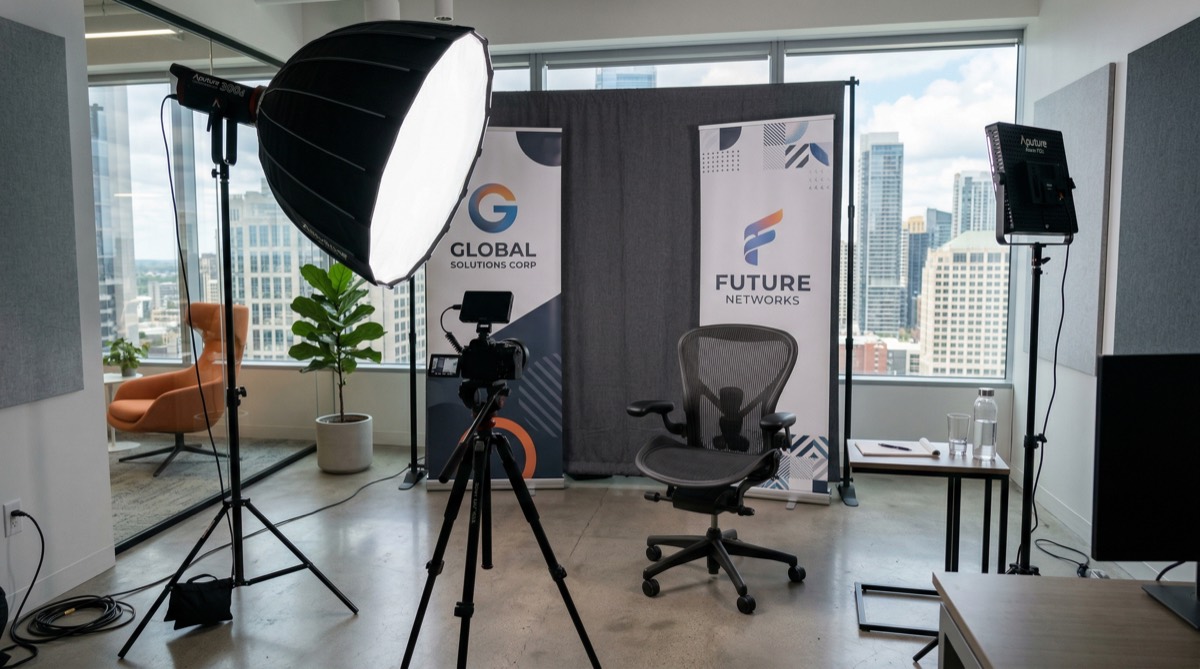
Corporate video covers a broad range of work. Recruitment films, internal communications, leadership messages, training content, case studies, culture pieces, event highlights. The common thread is that a business needs video content and they need it to look and sound professional. The question most Birmingham companies face is whether to go through a video agency or hire an experienced freelancer directly. Here's how to think about that decision and what the process actually looks like.
What corporate video actually involves
At its core, most corporate video work comes down to two things: people talking on camera and footage of the business in action. The talking head interview is still the foundation of corporate video because it works. A well-lit, well-framed interview with clear audio and a considered background communicates authority and trust in a way that stock footage and text overlays never will.
Beyond interviews, you might need b-roll of the office, the warehouse, the team at work, the product being used. This supplementary footage is what turns a single interview into a polished film. It adds visual variety, supports the narrative, and gives the viewer something to look at while the voiceover or interview audio plays underneath.
The technical requirements for both are straightforward but important. You need a cinema-grade camera with good low-light performance for office interiors. You need proper lighting, not just an on-camera LED, but key, fill, and background lights that separate the subject from the backdrop and make them look their best. And you need professional audio, either a lapel mic or a boom, positioned correctly to capture clean dialogue without room echo or air conditioning hum.
Talking heads vs culture films
These are the two most common corporate video formats, and they require slightly different approaches. A talking head interview is controlled and efficient. The camera stays on the tripod, the subject sits in a fixed position, and the focus is on getting clear, confident delivery. A good videographer will make the interviewee feel comfortable, coach them on eye line and pacing, and capture multiple takes to give the editor options.
A culture film is more fluid. You're capturing real moments: people collaborating in meetings, hands working on a product, the energy of a team lunch, the atmosphere of the workspace. This requires a different shooting style, often handheld or on a gimbal, with a documentary eye for authentic moments rather than staged setups. The result feels more cinematic and emotionally engaging, which is why culture films tend to perform well on careers pages and social channels.
Most corporate video projects in Birmingham combine both. An interview anchors the narrative, and culture b-roll brings it to life visually.
Why one experienced operator often works better than a full crew
There's a perception that corporate video needs a team. A director, a camera operator, a sound recordist, a producer. For a national TV commercial or a high-end brand film, that might be true. For the majority of corporate video work, it's overkill.
A single experienced videographer with their own kit can handle the camera, the lighting, the audio, and the direction. The advantage is simplicity. There's one person to brief, one person to coordinate with, and one person in the room with your interviewees. That smaller footprint means less disruption to the working day, faster setup and turnaround, and a more natural atmosphere for people who aren't used to being on camera.
The other advantage is cost. A video production agency will typically quote somewhere between two and five thousand pounds for a standard corporate video. An experienced freelancer with professional kit can deliver the same quality at £995 per day, with everything included. No kit hire surcharges, no producer fees, no surprise costs on the invoice.
What the day looks like
A typical corporate video shoot day in Birmingham runs roughly like this. I arrive on site about an hour before the first interview to set up lighting, position the camera, and test audio levels. The background matters, so I'll work with whatever space you have to create a clean, professional frame. An office with natural light and some depth behind the subject is ideal, but I've made boardrooms, breakout areas, and even corridors look good with the right lighting.
Interviews usually take 20 to 40 minutes each, depending on how many questions you have and how comfortable the subject is. In between, I'll adjust the setup if we're changing locations or backgrounds. After the interviews, I'll spend an hour or two capturing b-roll around the office or site. The whole shoot typically wraps within a standard working day.
Pricing transparency
My rate is £995 per day, all in. That covers the cinema camera, lenses, lighting, audio, gimbal, and drone. It covers the shoot day itself and the travel from Cheltenham, which is about an hour from central Birmingham. There are no add-ons for kit and no hourly surcharges. You know the budget before we start.
For larger projects that need a multi-camera interview setup, a dedicated producer, or a full production crew, Singularity Film handles those briefs with the same straightforward pricing approach, just at a larger scale.
If you're planning a corporate video project in Birmingham, whether it's a single talking head or a full recruitment campaign, feel free to get in touch. I'll give you an honest steer on what's involved and whether I'm the right fit.