Day rates for videographers in the UK vary enormously. You can find someone quoting £250 a day and someone else quoting £1,500 a day, and from the outside, it is not always obvious what the difference is. Both show up with a camera. Both produce a video. So why the gap?
The answer is that a day rate is not just the cost of a person holding a camera. It is the cost of their equipment, their insurance, their experience, their creative ability, and their post-production workflow. Understanding what sits behind the number helps you compare quotes fairly and avoid the common trap of choosing on price alone.
The £250 to £400 day rate
At this price point, you are typically hiring someone who is early in their career or treating videography as a side project alongside other work. The kit is usually consumer or prosumer: a mirrorless camera body, a kit lens or two, maybe a basic LED panel, and a camera-mounted microphone.
This is not necessarily bad work. Some people at this level are genuinely talented and building a portfolio. If your project is straightforward (a simple event recording, basic social media content, or a no-frills interview), this level can be adequate. But there are limitations you should be aware of:
- Limited lighting. At this rate, the operator probably does not carry professional lighting. You are relying on available light, which means the quality is at the mercy of whatever room you happen to be in.
- Basic audio. A camera-mounted shotgun mic picks up everything in the room, not just the person speaking. Without wireless lavaliers, interview audio will have more room noise and less clarity.
- Consumer-grade cameras. Consumer cameras produce good images in ideal conditions, but they have smaller sensors, less dynamic range, and fewer colour science options. In challenging lighting (which is most corporate environments), the difference becomes visible.
- Limited or no insurance. This is the biggest risk. If the operator does not carry professional indemnity and public liability insurance, any damage to your property or any dispute about the footage has no safety net. Always ask.
The £400 to £700 day rate
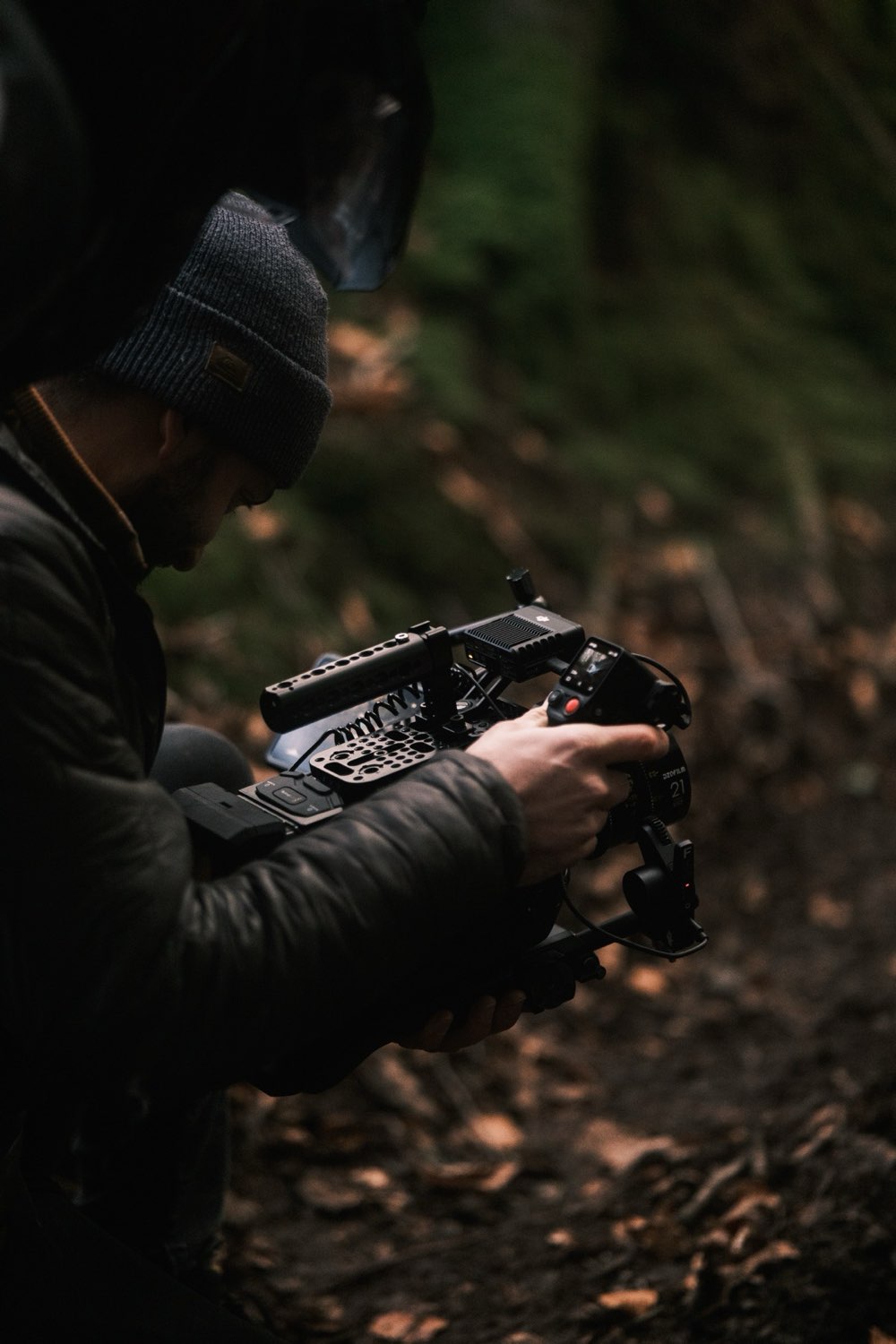
This is the range where you start finding competent professionals with reasonable equipment. At this level, expect a decent mirrorless or cinema camera, a small lighting kit (one or two LED panels), wireless audio, and some form of stabilisation (a gimbal or slider). The operator likely has a few years of experience, a portfolio of completed work, and basic insurance.
For many projects, this is perfectly serviceable. If you need a talking head interview with clean audio and decent lighting, a competent operator at £500 a day can deliver that. The footage will look professional on screen and the audio will be broadcast-quality if the operator knows what they are doing with their wireless mics.
The limitations at this level are more about what is not included. Post-production may be basic: a straightforward edit with minimal colour grading. The lighting setup will handle one or two positions but may struggle to control a large or difficult space. Drone work may or may not be available. And the creative input tends to be more executional than strategic. You tell them what to film, and they film it well. But the strategic thinking about how to tell the story, what order to shoot in, and how to maximise the edit is less developed.
The £700 to £1,000 day rate
This is where you find experienced professionals with cinema-grade equipment, comprehensive lighting packages, and the creative experience to contribute meaningfully to the project beyond just operating a camera. At my rate of £995/day, here is what is included:
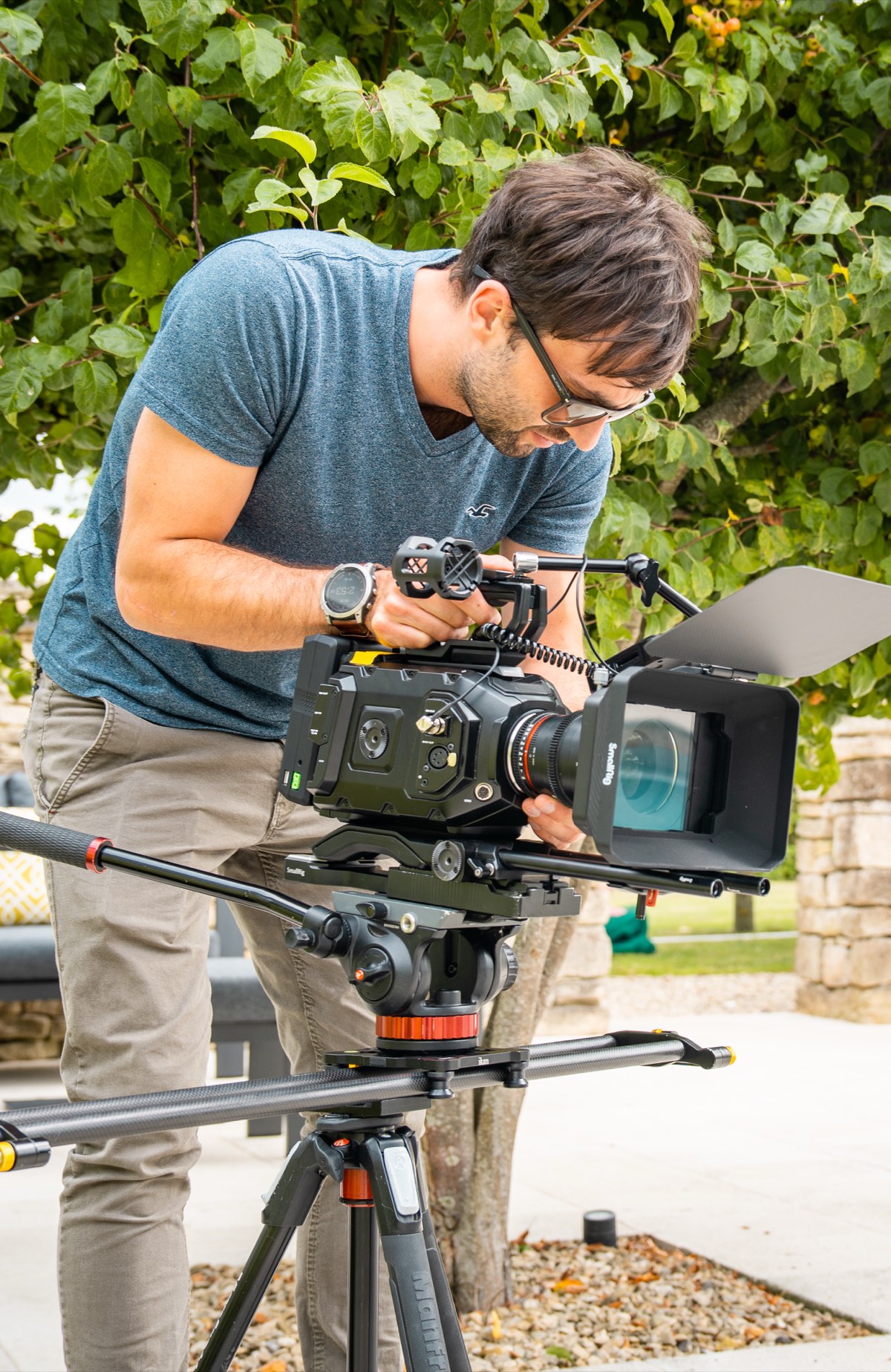
- Cinema camera system. I shoot on a Blackmagic URSA 12K with a set of cine lenses. The sensor, dynamic range, and colour science are at a broadcast and cinema level. The difference in image quality between this and a consumer mirrorless is visible to anyone, not just pixel-peepers.
- Full lighting package. Three 300W LEDs, a 600W, a 1200W, Fresnel and spot fixtures with gobos, softboxes, diffusion, LED panels, LED tubes, and all the grip to deploy them. This is enough to control any interior, from a small meeting room to a large warehouse. The lighting comes with the day rate; there is no separate hire invoice.
- Professional audio. Wireless lavalier systems for every subject, plus a shotgun mic for backup and B-roll. Clean audio on every take, every time.
- Stabilisation and movement. Gimbal, slider, and tripod with a fluid head. Different tools for different movement requirements.
- Drone systems. Multiple drone platforms included as part of the kit package when the project requires aerial footage.
- Insurance. Full public liability and professional indemnity insurance.
- Experience. Hundreds of shoots across corporate, commercial, brand, music, and documentary work. I am not just operating the camera; I am making creative decisions about lighting, framing, pacing, and performance that improve the final product.
The kit I carry to a shoot is worth over £100,000. The day rate covers the depreciation, maintenance, insurance, and eventual replacement of that equipment. A lower rate either means less equipment or an unsustainable business model.
The £1,000 to £1,500+ day rate
Above £1,000 per day, you are typically paying for one of three things: a specialist skill (high-end commercial DP work, specialist camera systems like Arri or RED), a London weighting (rates in London are consistently 20 to 40 percent higher than the rest of the UK), or a package that includes post-production in the day rate.
Some operators at this level include a basic edit in their day rate, which makes the comparison with lower rates misleading. A £1,200 day rate that includes a same-day edit might actually be cheaper than a £700 day rate plus a separate £800 edit invoice. Always check what is and is not included before comparing numbers.
For large-scale productions requiring multiple crew members, rates work differently. Through Singularity Film, I quote production packages rather than individual day rates, because the total cost depends on crew size, shoot duration, and the scope of post-production. Production packages start from £1,500+VAT.
What to check before you book
Regardless of the day rate, there are several things worth verifying before you commit to a booking. These are the questions that separate a reliable professional from a risk.
Insurance. Ask for proof of public liability insurance (minimum £1 million, ideally £5 million) and professional indemnity cover. If the operator cannot provide this, walk away. It is not worth the risk, regardless of how good their reel looks.
Kit ownership. Does the operator own their equipment, or are they hiring it in? Kit ownership matters because it means the operator knows their equipment intimately, can troubleshoot problems on set, and is not passing hire costs through to you. If they are hiring in a camera for your shoot, they may be less familiar with it than their showreel suggests.
Portfolio relevance. Look at their previous work and check that it matches what you are asking them to produce. A videographer with an excellent wedding reel may not be the right choice for a corporate talking head shoot. The skills are different. The lighting is different. The way you manage talent is different. Ask to see examples of work similar to your project.
What is included in the rate. The day rate should be clearly defined. Does it include travel? Equipment? How many hours constitute a "day" (typically 8 to 10)? What happens if the shoot runs over? Is post-production separate? Are there additional costs for specific kit like drones or specialist lenses? Get this in writing before the shoot date.
Post-production pricing. For most projects, the shoot is only half the cost. Editing, colour grading, sound mixing, motion graphics, and music licensing all sit on top of the day rate. A quote that only covers the shoot day is an incomplete picture of the total project cost. Always ask for the full project quote, including post-production, before comparing operators.
Red flags to watch for
Over the years, I have heard enough client horror stories to compile a reliable list of warning signs.
- No insurance. Non-negotiable. If they do not have it, do not hire them.
- No contract or terms. A professional operator will have a booking agreement that covers cancellation, usage rights, payment terms, and deliverables. If there is no paperwork, there is no protection for either side.
- Consumer cameras presented as professional. There is nothing wrong with a consumer camera for personal use, but if someone is charging professional rates and turning up with a camera body that costs £800 new, the economics do not work. The camera is a tool, and professionals invest in professional tools.
- No lighting on a corporate shoot. If a videographer turns up to an office shoot without any lighting equipment, the footage will look like available-light content. That might be fine for a quick social clip, but for a talking head or brand film, it is not acceptable at a professional rate.
- Vague delivery timelines. "I will get it to you when it is ready" is not a delivery timeline. A professional will give you a clear estimate and stick to it, or communicate proactively if something changes.
- No showreel or portfolio. Everyone has to start somewhere, but if someone is charging professional rates, they should have professional work to show. If the portfolio is thin, the rate should reflect that.
How to compare quotes fairly
When you have multiple quotes in front of you, compare them on a like-for-like basis. Create a simple checklist:
- What camera system are they using?
- Do they bring lighting? How much?
- Is audio equipment included (wireless lavaliers)?
- Is drone work available and included?
- How many hours is the shoot day?
- Is travel included or charged separately?
- What does the post-production quote cover?
- How many revision rounds are included?
- What are the deliverables (formats, lengths, versions)?
- Do they have insurance? What level?
Two quotes that look identical in price can be wildly different in scope. A £600 quote that includes a full edit, two revision rounds, and three deliverables is better value than a £500 quote for shoot-only with post-production charged hourly at £50 an hour.
The honest position on price
I charge £995/day because that rate covers cinema-grade equipment, a full professional lighting and audio package, drone systems, insurance, and the experience to make creative decisions that improve the final product. It is not the cheapest rate in the UK, and it is not the most expensive. It reflects the actual cost of operating at a professional level with equipment that produces broadcast-quality results.
There are excellent videographers who charge less than I do, and there are excellent videographers who charge more. The rate is one factor. The quality of the work, the reliability, the creative contribution, and the overall value are what matter. Compare the full picture, not just the number.
Video production starts from £1,500+VAT through Singularity Film. Photography starts from £400+VAT. If you want to discuss a project and get a quote based on your specific requirements, get in touch.