I have shot music videos for solo artists, full bands, DJs, and everyone in between. The one thing they all have in common is that none of them knew what the process actually involved before we started. That is not a criticism. There is no reason a musician would know how a video production works. But the gap between expectation and reality is where money gets wasted, ideas get diluted, and finished videos end up sitting on a hard drive instead of doing their job on YouTube.
This is the guide I wish I could hand every artist before our first call. It covers how a music video comes together, what it costs at different levels, what a shoot day actually looks like, and what you need to think about if you want the final product to actually work for your career.
Concept development: the part everyone skips
Most artists come to me with one of two things: either a very specific vision they have been building in their head for months, or absolutely nothing. Both are workable. What does not work is assuming you will figure it out on the day. A music video without a concept is just footage of people playing instruments in a room. That can work, but only if you design it to work. Otherwise it looks like what it is: a shoot with no plan.
The concept does not need to be complicated. Some of the strongest videos I have made are built on a single, clear idea executed well. One location. One look. One visual metaphor. The complexity comes from the lighting, the framing, the edit rhythm. Not from trying to cram six narrative threads into a three-minute song.
When I develop a concept with an artist, I start by listening to the track on repeat. I want to understand its structure, its emotional arc, where it builds, where it drops. The video needs to work with that structure, not against it. A song that builds slowly deserves a video that builds slowly. Cutting frantically during a sparse intro makes the viewer feel like something is wrong, even if they cannot articulate why.
Performance vs narrative: choosing your format
Music videos broadly fall into two categories, and most fall somewhere between them.
Performance videos show the artist or band performing the song. This can be live, lip-synced, or somewhere in between. The strength of a performance video is authenticity. It puts the artist front and centre, it works well for building a fanbase because people connect with faces, and it is generally simpler to execute. The challenge is making it visually interesting for the full duration. That is where lighting and camera movement earn their keep.
Narrative videos tell a story. They might feature the artist as a character, or they might not feature the artist at all. Narrative videos are more ambitious, require more planning, often need actors or at least willing friends, and cost more because they demand more shoot time and more complex editing. When they work, they are unforgettable. When they do not work, they feel like a student film.
For most independent artists, I recommend a performance video with strong visual identity over a half-committed narrative. A compelling performance video with good lighting, interesting framing, and a single well-chosen location will outperform a narrative video where the story does not land. You can always add narrative elements to a performance foundation. Going the other way is harder.
Budget tiers: what you actually get at each level
This is the question everyone asks first and nobody answers honestly. So here is the honest answer.
Under 1,000 pounds. At this level you are getting a single operator for half a day, one location, minimal lighting, and a basic edit. This is your debut single, your first visual, your proof of concept. It will not look like a major label release, but with the right operator it will look professional and serve its purpose. The limiting factor at this budget is time. Half a day does not allow for much experimentation.
1,000 to 3,000 pounds. This is the sweet spot for independent artists who are serious about their visual output. A full day of shooting, proper lighting setup, potentially two locations or a location with multiple looks, a considered edit with colour grading, and delivery in all the formats you need. Most of my music video work falls in this range. It is enough budget to do something genuinely good.
3,000 to 8,000 pounds. Multi-day shoot, potentially a small crew (director, camera operator, lighting tech), more ambitious locations, potentially rented props or set design, a more complex edit with VFX elements or animation. At this level you are competing visually with signed artists, and you should expect a product that reflects that.
Above 8,000 pounds. This is where Singularity Film comes in. Full production crew, location permits, art direction, potential extras, multi-day shoots, professional grade VFX and colour science. This is label-level production for artists who want that standard without being signed to a label.
These are rough guides, not fixed packages. Every project is different. The single biggest variable in music video cost is the number of locations and the number of shooting days. Simplify those, and you can stretch any budget further.
What a shoot day actually looks like
This is the part nobody tells you. A full music video shoot day is not glamorous. It is long, it involves a lot of waiting, and most of the work happens before the artist does anything.
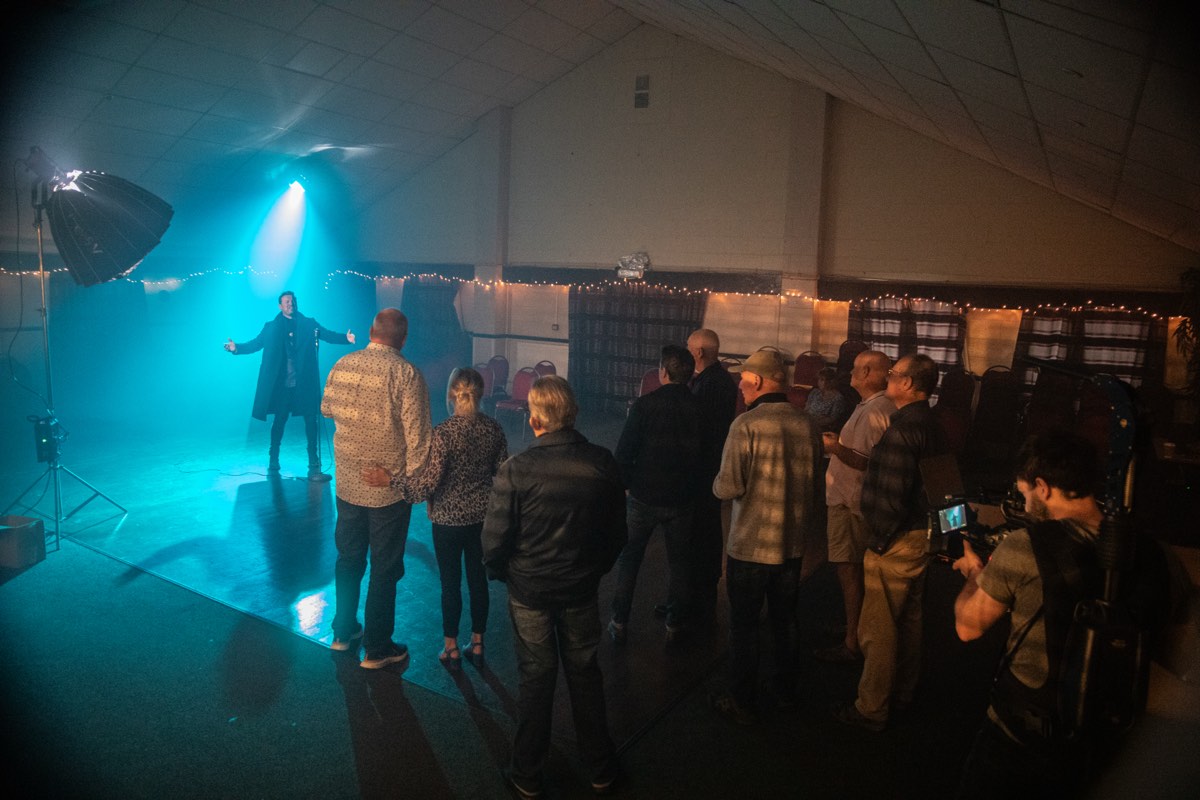
I typically arrive at the location two to three hours before the artist. That time is spent setting up lighting, testing angles, working out camera moves, and solving problems. Every location has problems. A window in the wrong place. A hum from an air conditioning unit. A wall colour that clashes with the artist's wardrobe. These all get resolved before anyone steps in front of the camera.
When the artist arrives, we do a walkthrough. I show them where they will be performing, explain the camera positions, and we do a few test runs. This is not wasted time. It gets the artist comfortable, lets me fine-tune the lighting for their skin tone and wardrobe, and often produces some of the best footage of the day because they are relaxed and not overthinking it.
Then we shoot. For a performance video, I will run through the full song between ten and twenty times, changing angle, lens, and movement each time. That might sound excessive, but the edit needs options. A three-minute video cut entirely from one angle and one lens looks flat, no matter how good the performance is. I need wide, mid, close, detail, movement, static, high, low. Each pass through the song gives me something different to work with.
Lighting for music video: why it matters more than the camera
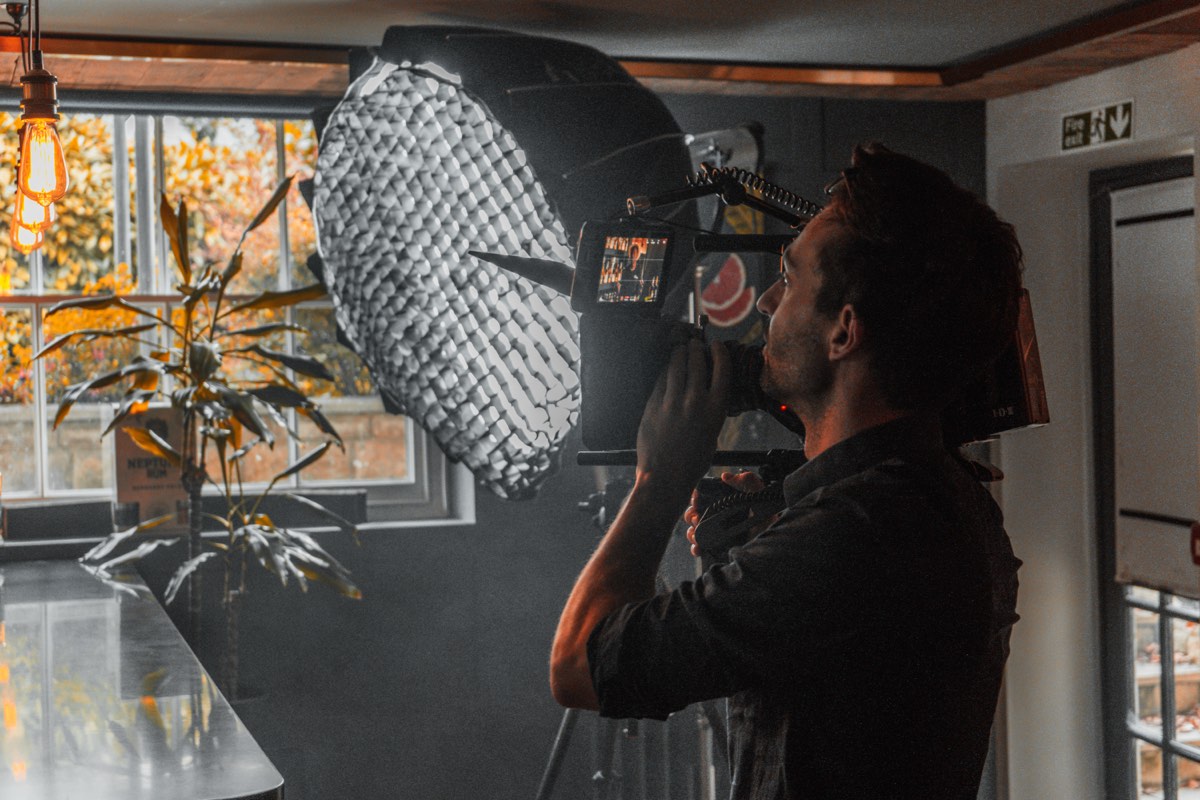
If there is one hill I will die on, it is this: the lighting makes the music video, not the camera. I have seen stunning music videos shot on mid-range cameras with exceptional lighting, and I have seen unwatchable ones shot on the most expensive cinema cameras in existence, lit by whatever overhead fluorescent happened to be in the room.
Music video lighting is different from corporate or documentary lighting. It is allowed to be dramatic, directional, coloured, and moody. In fact, it should be. A music video is not trying to look natural. It is trying to create a feeling. And light is the fastest route to feeling.
For a typical music video, I will bring my full Aperture lighting kit: 300W, 600W, and 1200W LEDs, plus Fresnel and spot units, LED tubes for colour, and plenty of diffusion and flags. The big units let me overpower any ambient light in the room and take complete control of the look. The colour tubes and gels let me create looks that would be impossible with available light alone. Purple side light. Warm backlight cutting through haze. A single hard source creating deep shadows. These are the details that separate a music video from a home video.
Haze is the other critical element. A small amount of atmospheric haze in the room makes light visible. Instead of light just illuminating the subject, you see the beams themselves. It adds depth, dimension, and that cinematic quality that everyone recognises but few can articulate. I use a hazer on almost every music video shoot. It is a small detail that transforms the entire feel of the footage.
Editing to the beat: the invisible craft
A music video edit is fundamentally different from any other type of video edit. The cuts have to work with the music. Not just vaguely in time with it, but precisely, intentionally, rhythmically. A cut that lands one frame late on a snare hit feels wrong. The viewer will not know why, but they will feel it.
I edit all my music video projects myself, and I import the multitrack or master into the timeline first. Every cut is placed against the waveform. Verse sections get longer takes and fewer cuts to let the performance breathe. Choruses get faster cuts, bigger movements, more energy. Breakdowns get space. Drops get impact. The edit mirrors the song's dynamics because the viewer is experiencing both simultaneously.
Colour grading on a music video is also more expressive than other formats. Where a corporate video needs clean, accurate colour, a music video can push things. Crushed blacks, lifted highlights, saturated colour palettes, desaturated skin tones with one colour popping. The grade should feel like part of the song's identity, not just a technical process applied in post.
Delivery formats: where your video actually goes
This is the part most artists forget about until the video is finished, and then they realise they needed five different versions.
At minimum, you need:
- YouTube master. Full resolution, 16:9, typically 4K. This is your primary distribution format. YouTube compresses everything, so starting with the highest quality file gives you the best result after compression.
- Instagram Reels / TikTok vertical cuts. 9:16, 60 seconds or less, pulled from the strongest moments. These are not the same as your full video cropped to vertical. They need to be re-edited for the format, with the hook in the first two seconds.
- Instagram feed square. 1:1, 60 seconds. Some artists skip this now, but if your audience is on Instagram, it is still worth having.
- Spotify Canvas. A looping 8-second vertical video that plays on the Spotify app when someone listens to your track. Underused by independent artists, and it is free to upload through Spotify for Artists.
- Behind the scenes content. If your videographer is shooting BTS alongside the main shoot (or you have someone on your team doing it), this is some of the best-performing social content you will produce. People love seeing the process.
I deliver all of these as part of the post-production package. The master edit is the primary deliverable, and the social cuts are derived from it. Planning for these formats during the shoot, not after, means I am grabbing vertical-friendly angles and wide shots that crop well throughout the day.
Getting the most out of your music video
A music video is an investment. For an independent artist, it might be one of the biggest single investments you make in a release cycle. So do not waste it by uploading it to YouTube with no strategy and hoping for the best.
Release the social teasers before the video drops. Coordinate the video release with the track release if possible, or use the video as a second-wave promotional beat for a single that has already been out for two to three weeks. Share the behind-the-scenes content in the weeks leading up to the release. Write a proper YouTube description with links to streaming platforms, social channels, and credits. Create a custom thumbnail that is not just a still from the video.
And think about the video's shelf life. A well-made music video should still be doing work for you years from now. It should still represent you accurately, still look professional, still earn new fans when they discover it through YouTube search or Spotify. That is why concept and execution matter more than trends. Trends date. Good filmmaking does not.
Related
- Documentary filmmaking for brands
- What makes a great videographer
- Video SEO: how to get your content found on YouTube
Planning a music video?
Full lighting, cinema cameras, concept to delivery. Let's talk about your track.
Get in touch