Stills and Video Bristol
Stills and Video from One Shoot Day: Why It Works and How to Brief It
By Moss Davis · June 2025 · 6 min read
Most commercial content briefs need both stills and video. A product launch needs hero images for the website, campaign video for social, and supporting stills for PR. A lifestyle shoot needs short-form video clips alongside photography for editorial and paid media. Booking a photographer and a videographer separately means two different shoot days, two different visual approaches, and significantly more budget. Booking one operator who does both changes the economics and the consistency of the output.
How the kit works for both formats
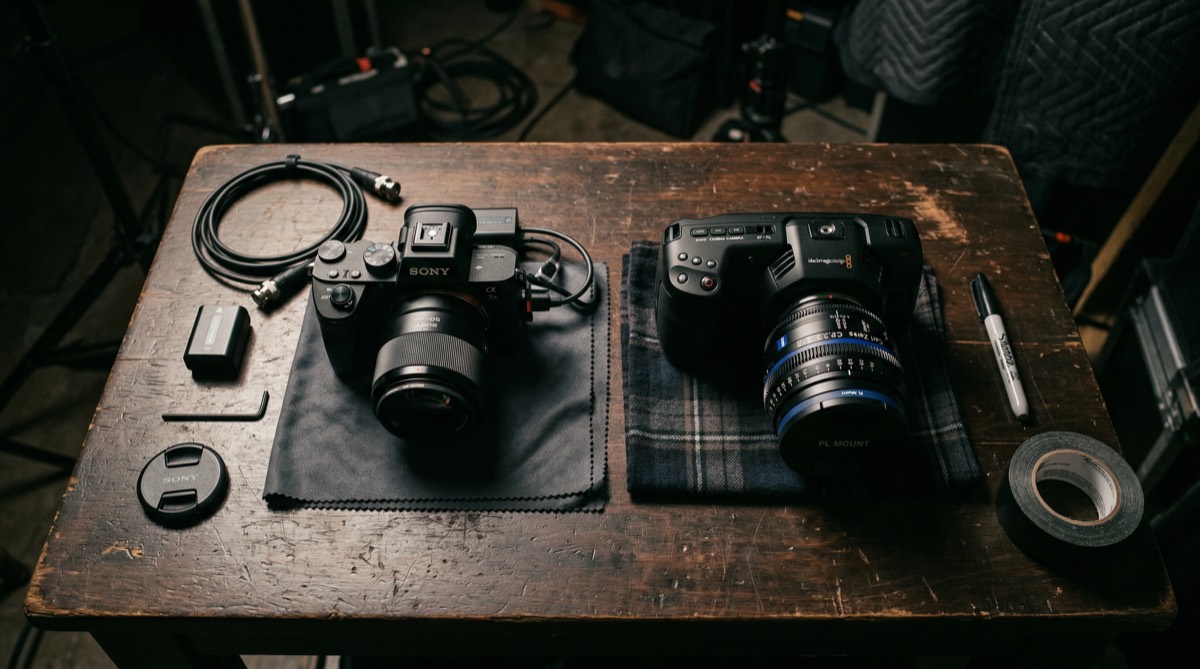
The camera setup for a combined stills and video shoot uses two primary bodies, each doing different work. The Blackmagic URSA 12K handles the primary video role — cinema RAW footage that goes through a proper grade in post. The Sony A7 IV handles stills — full-frame, 33MP, with the lens flexibility to move between wide environmental shots and tight product or portrait work.
The lighting setup is the same for both. A well-lit scene for video is a well-lit scene for stills. Fresnels for hard light, softboxes for fill, negative fill panels for contrast — these are the same tools regardless of which camera is pointing at the subject. The time cost of setting up lighting is shared across both formats rather than duplicated across two separate days.
What a combined day produces
A well-planned combined shoot day for a Bristol brand client typically delivers:
- Video — hero film, product reveals, lifestyle sequences, B-roll, cutaways. Depending on the brief, aerial content from the Mavic 4 Pro or FPV as well.
- Stills — hero shots, supporting editorial images, product flatlay or detail images, environmental portraits. Usually 30–80 selects after cull, depending on the scope of the brief.
- Consistent visual language — because the same lighting setup, the same locations, and the same eye are behind both formats, the stills and video look like they belong together. That's harder to achieve when different operators shoot on different days.
When it makes sense vs when it doesn't
Combined stills and video works well when both formats are genuinely needed from the same shoot concept — the same subjects, the same locations, the same lighting environment. It works less well when the stills brief and the video brief are pulling in completely different directions, or when the stills require extensive retouching or controlled studio conditions that aren't compatible with a video-led workflow.
For lifestyle, product, food, and brand content, the formats typically sit comfortably together. For architectural or highly technical product photography where every detail needs precise control, a dedicated stills-only day may make more sense.
Briefing a combined shoot day
The brief needs to include both formats and be clear about the priority. If video is the primary deliverable and stills are secondary, the shoot day is structured around the video shot list with stills captured opportunistically. If stills are the primary output, the reverse applies. Trying to give both formats equal weighting on a single day without a priority order is the most common cause of a combined shoot underdelivering.
For combined stills and video briefs in Bristol, get in touch with what both formats need to deliver and I'll come back with a practical plan for the day.
Related
- Videographer Bristol — services and day rate
- Product video in Bristol
- Videographer for hire in Bristol
Need stills and video in Bristol?
One operator, two formats, consistent visual language. £995/day.
Get in touch