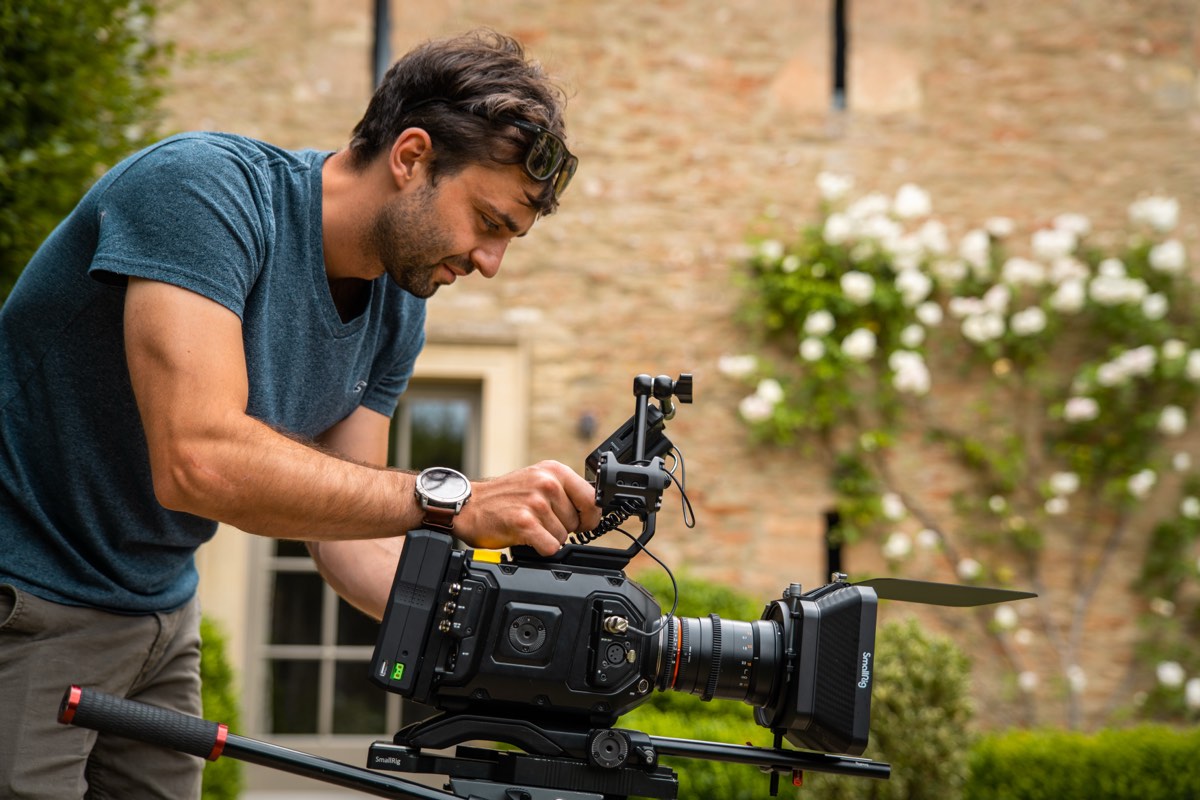
I run both sides of this equation. As a solo videographer, I shoot corporate work, brand content, and commercial projects across the UK on my own kit. Through Singularity Film, my production company, I put together full crews for larger productions. So I have no incentive to push you towards one or the other. I just want the right setup for the project.
The question comes up constantly: should we hire a videographer, or should we hire a production company? The answer depends on five things, and most of them have nothing to do with budget.
What a solo videographer actually looks like on the day
When you hire me as a solo operator, you get one person who handles camera, lighting, audio, and often drone work. I turn up with a vehicle full of kit: Blackmagic URSA 12K, a full Aperture lighting package, wireless audio, gimbal, slider, drone systems. It is a lot of equipment for one person to operate, but the workflow is built around efficiency. I have been doing this long enough that the setup is fast and the transitions between setups are smooth.
A typical solo shoot day looks like this: I arrive an hour before the first shot to load in and set lighting. We shoot the planned content through the day, usually a mix of interviews and B-roll. I manage the lighting changes between setups myself, which means there is a 15 to 20 minute gap when we move from one location or look to the next. By the end of the day, we have solid coverage across multiple setups, with broadcast-quality footage and clean audio throughout.
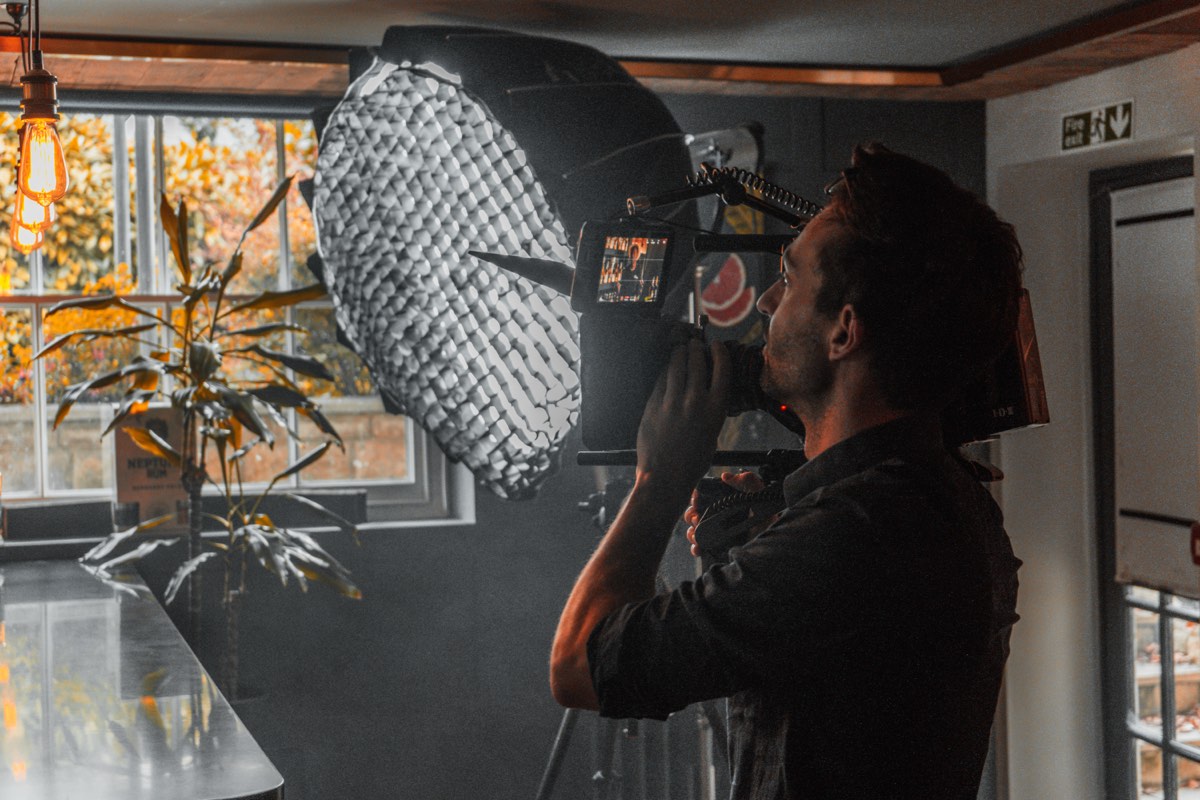
The advantages are real. You are dealing with one person, one creative vision, one point of contact. Communication is simple. There is no game of telephone between you, a producer, a director, and a camera operator who all have slightly different interpretations of the brief. I hear what you want, and I execute it. Decisions happen quickly on set because there is nobody to consult.
The limitations are also real. I can only operate one camera at a time. If we are shooting a two-person conversation that needs simultaneous coverage from two angles, I can do it in a single-camera style (shooting one person, then reversing), but that takes longer and requires your talent to repeat their answers. I cannot simultaneously fly a drone and operate a ground camera. I cannot light a scene while the camera is already rolling. These are physics problems, not skill problems.
What a production company setup looks like
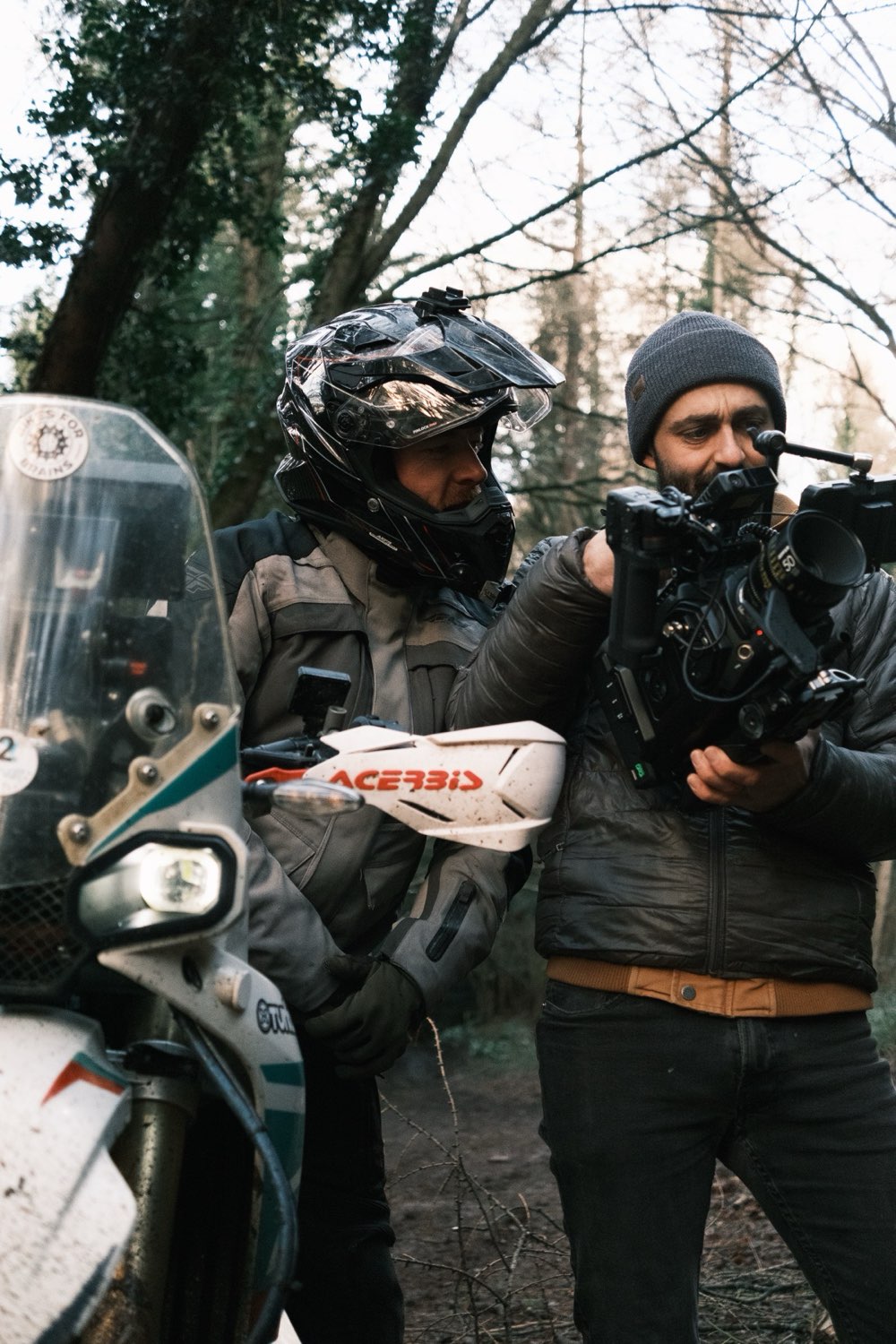
When I quote a project through Singularity Film, the crew size matches the project. A typical mid-range commercial production might have me as director/DP, a camera assistant pulling focus, a sound recordist, and a producer managing the schedule and talent. For larger work, we might add a gaffer for lighting, a second camera operator, a drone pilot, a grip, or a makeup artist.
The difference on set is significant. With a dedicated sound recordist, audio quality goes up because someone is monitoring it full-time, adjusting levels, managing boom and lav positions. With a camera assistant, I can work faster because I am not stopping between takes to change lenses or adjust filters. With a producer on set, the client has someone whose entire job is to make sure the day runs to schedule and that every shot on the list gets covered.
Multi-camera work becomes straightforward. Two or three cameras rolling simultaneously means a conversation is captured from every angle in real time. The edit has more options. The talent does not need to repeat anything. Drone and ground coverage can happen at the same moment. The production moves faster in some ways, because tasks happen in parallel rather than in sequence.
The budget question
This is where most people start, and it is a reasonable place to begin. My solo day rate is £995/day, which includes all kit. A full production through Singularity Film starts from around £1,500+VAT for simpler projects and scales up depending on crew size, shoot duration, and deliverables.
But the comparison is not as simple as "solo is cheaper." A solo operator might take two days to cover what a three-person crew covers in one. If your talent is expensive to have on set (a CEO, a celebrity, a medical professional who is losing clinic time), then a faster shoot with more crew might actually be more cost-effective overall. The crew costs more per day but finishes the job in fewer days.
The cheapest option is the one that gets the right result in the fewest shoot days. Sometimes that is one person. Sometimes it is five.
For post-production, the pricing model is separate from the shoot and depends on the edit scope. A solo shoot and a crew shoot both produce footage that needs editing, grading, sound mixing, and delivery. The post costs are driven by the complexity of the final deliverable, not by how many people were on set.
When a solo videographer is the right call
There are projects where a single operator is not just adequate but genuinely better. These include:
- Documentary-style content where a small footprint matters. If you are filming in someone's home, a working kitchen, a small workshop, or any space where a crew would be intrusive, one person with a camera creates a more natural environment. People behave differently when there are six strangers in their space versus one.
- Social media and brand content that needs to be authentic and quick. If you need 10 short clips for Instagram in a day, the overhead of a full crew is unnecessary. A solo operator can move fast, adapt to opportunities, and produce a high volume of content without the coordination overhead.
- Single-subject interviews and talking heads. One camera, one light setup, one microphone. This is bread-and-butter solo work and there is no advantage to having more people on set for a straightforward sit-down interview.
- Event coverage where mobility matters more than multi-angle coverage. Conferences, trade shows, product launches: one operator who can move freely through a space will often capture better footage than a crew that is set up in one position.
- Regular content production on a retainer basis. If you need a videographer on site once a month for ongoing content, a solo operator is the practical and economical choice.
When you need a production company
Some projects genuinely require more than one pair of hands. Not because the videographer is not good enough, but because the scope demands parallel work. These situations include:
- Narrative or scripted content. Anything with actors, scripted dialogue, or a storyline that needs directing. I cannot direct a performance while simultaneously pulling focus and adjusting the boom mic. Nobody can.
- High-end commercials where the production value needs to match a national broadcast standard. These projects need a gaffer, a focus puller, a sound recordist, often hair and makeup, and a producer to keep the train on the tracks.
- Multi-camera live events like panel discussions, live streams, or performances that cannot be repeated. If it happens once and you miss it, it is gone. Multiple cameras provide redundancy and coverage that a single operator cannot match.
- Tight turnaround on complex shoots. If you have 12 interviews to film in a single day across three locations, a crew can leapfrog setups. While I am shooting in Room A, the gaffer is already lighting Room B. That kind of efficiency is impossible alone.
- Projects with significant logistical complexity. Location permits, road closures, talent management, multi-day schedules, health and safety requirements. A producer handles all of this so the creative team can focus on making the film.
Creative control: the overlooked factor
This one rarely gets discussed, but it matters. When you hire a solo videographer, you are hiring that person's eye, taste, and creative instinct. You get consistency because everything passes through one brain. The lighting, the framing, the movement, the edit, the grade: it all comes from one creative sensibility. For some projects, that coherence is exactly what you want.
With a production company, you get collaboration. The director, the DP, the editor may all bring different influences and ideas. That can produce work that is richer and more layered than any single person could make alone. But it also introduces more variables. More people means more opinions, more creative compromises, and more scope for the final product to drift from your original vision if the brief is not airtight.
Neither approach is better. It depends on what the project needs. A brand film that needs to feel personal and intimate often benefits from one person's vision. A high-concept commercial that needs to feel polished and cinematic often benefits from a team.
Turnaround and post-production
Solo operators typically handle their own editing, which means your project gets one person's undivided attention in post. I edit, grade, and deliver everything myself unless the project scope requires bringing in additional editors. The advantage is speed: there is no handover between the person who shot it and the person who edits it. I know what I shot, I know what works, and I can cut efficiently.
Production companies often have a more structured post-production pipeline. The footage goes from the shoot to an editor, then to a colourist, then to a sound mixer, with the director overseeing revisions at each stage. This takes longer but can produce more polished results, particularly on projects that need motion graphics, complex sound design, or extensive colour work.
For typical turnarounds: a solo project might go from shoot to final delivery in one to two weeks. A production company project might take three to six weeks, depending on the edit complexity and the number of revision rounds.
The honest answer
Most projects that come across my desk are best served by a solo operator. That is not ego talking; it is just the reality that most businesses need content that is well-shot, well-lit, and well-edited, and one experienced person with good kit can deliver that. The overhead of a full crew only makes sense when the project genuinely demands it.
If you are unsure which route is right, the simplest thing to do is describe the project and let me tell you which setup makes sense. I will quote both options if the project sits on the boundary. I would rather give you an honest recommendation than sell you a bigger crew than you need, or set you up with a solo shoot that is going to feel rushed.
My solo day rate is £995/day with full kit included. Video production through Singularity Film starts from £1,500+VAT. Photography starts from £400+VAT. Get in touch with a brief and I will tell you which route gets you the best result for your budget.
Related
- How much does a videographer cost in the UK?
- Corporate videographer in Bristol
- Videographer Bristol: services and day rate
Need help deciding?
Tell me about your project and I will recommend the right setup. No obligation.
Get in touch