I want to be clear about something before I get into this. I am not writing a hit piece on AI. I use Sora for pre-production visualisation. I use Runway for rough concept edits. I use AI transcription tools almost daily. These tools have made parts of my workflow faster, and I would not go back to doing those tasks manually.
But there is a growing assumption in marketing departments and boardrooms that AI video tools can replace the entire production process. That you can type a prompt, get a video, and move on. I have spent enough time with both the technology and the reality of production to know exactly where that assumption breaks down. These are not edge cases. They are the core of what makes video effective.
Directing real humans on camera
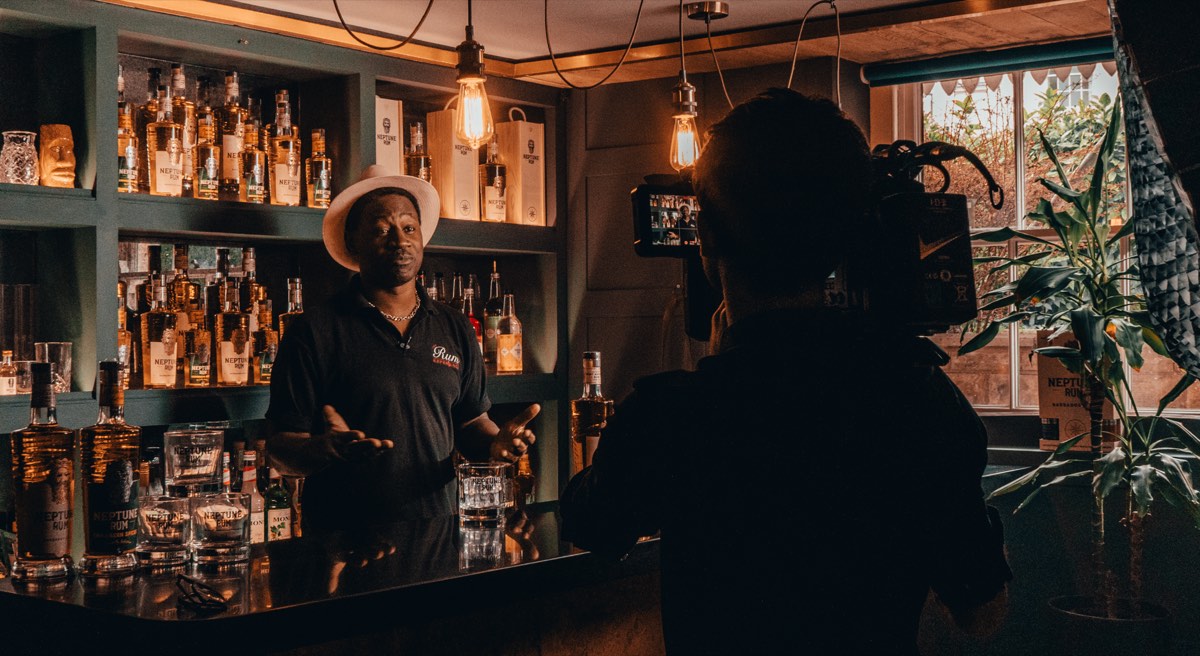
Most people are uncomfortable on camera. This is not a technical problem. It is a human one. When I set up a talking head interview with a company director who has never been filmed before, the first fifteen minutes are about building trust. Making conversation. Letting them hear their own voice played back so it stops feeling strange. Adjusting the chair, the eyeline, the framing, until they stop thinking about the camera and start thinking about what they actually want to say.
Last year I filmed a series of internal comms videos for a technology company. The Head of Engineering had important things to say about the company roadmap but froze the moment the camera rolled. We stopped, talked about something unrelated for ten minutes, adjusted the setup so the camera was further away, and I asked her to explain the roadmap to me as if I were a new hire. What we got was natural, authoritative, and completely different from what a scripted teleprompter read would have produced.
No prompt in Sora or Veo will produce that. Not because the technology is not advanced enough, but because the problem it needs to solve is interpersonal, not computational.
Reading a room and adapting
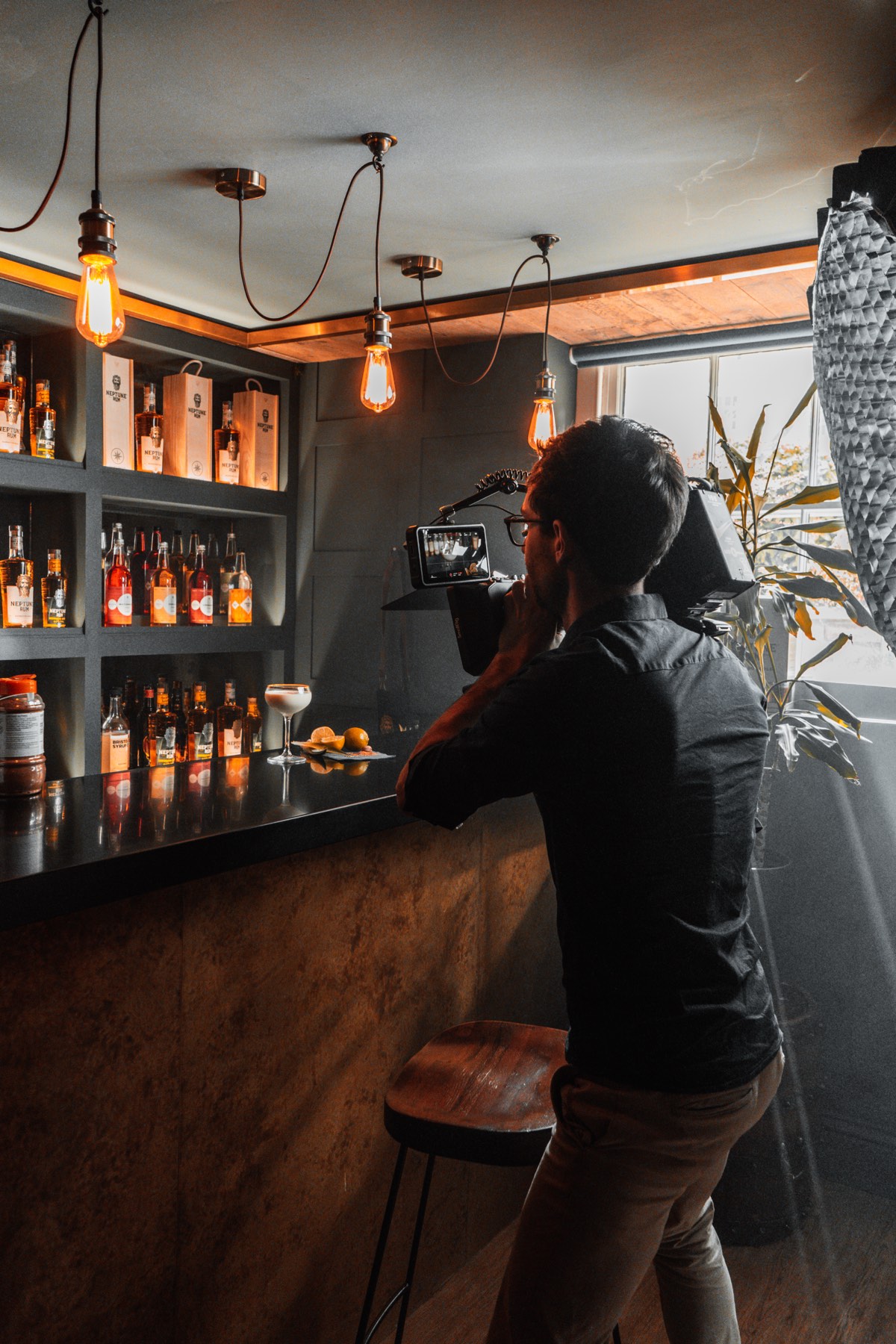
Production plans rarely survive contact with reality. The room you were promised is being used for a meeting. The light through the window is blowing out the background. The interviewee's schedule has been cut from an hour to twenty minutes. The "quiet" office has construction happening next door.
Every one of these is something that has happened to me on actual shoots. Every one of them required an immediate human decision. Move to a different room. Flag the light and adjust the exposure. Restructure the interview to hit the three essential questions first. Wait for a gap in the drilling and roll quickly.
AI generates content in a vacuum. It has no awareness of the physical environment, no ability to adapt to changing conditions, no capacity to make the kind of rapid creative decisions that turn a difficult situation into something usable. The best footage I have ever captured has come from moments where the plan fell apart and I had to improvise. That is not a failure mode. That is filmmaking.
Lighting a real space
This is something I feel strongly about because it is the single biggest factor in the quality gap between professional video and everything else. AI can generate footage that looks vaguely cinematic in a generic way. What it cannot do is walk into a specific room, assess the existing light sources, identify the problems, and solve them with physical equipment.
I recently filmed in a listed building in Bath. The rooms had beautiful period features but terrible overhead fluorescent lighting, small windows, and dark wood panelling that absorbed light. Making that space look good on camera required a specific combination of large-format LED panels bounced into the ceiling for ambient fill, a keyed Fresnel through diffusion for the interview subjects, and negative fill on the shadow side to maintain contrast. That is a set of decisions based on the physics of that particular room, the position of the windows, the colour temperature of the existing light, and the visual feel we wanted to achieve.
Type "interview in a period building in Bath" into any AI video tool and you will get something that looks like a still from a National Trust brochure. It will not look like that room. It will not serve the purpose of making the real people in the real space look their best.
Capturing genuine moments
The most effective content I produce is almost never the content we planned for. It is the unscripted exchange between colleagues that reveals something true about the company culture. It is the look on someone's face when they describe the project they are most proud of. It is the moment at a corporate event when the CEO stops giving the rehearsed speech and says something honest.
You cannot generate authenticity. Audiences are extraordinarily good at detecting artificiality, even if they cannot articulate why. A testimonial video works because the person speaking is real, their emotion is real, and the viewer can feel that. Replace that with generated content and you lose the thing that makes it effective. The entire point of a testimonial is that it is not fabricated.
I shot a case study film for a construction company where the project manager teared up while describing the community centre his team had built. That moment made the film. It generated more engagement than anything else in the company's marketing portfolio that quarter. You cannot prompt emotion. You can only create the conditions for it to happen, and you need to be there with a camera when it does.
Understanding brand nuance from a brief
When a client sends me a brief, the document is the starting point, not the answer. Understanding what they actually need requires conversation. What is the tone of their brand? What do their competitors' videos look like, and how do they want to differentiate? What does their internal culture feel like, and how much of that should be visible? Who is the audience, and what is the one thing they should take away from the video?
These are interpretive questions. They require understanding context, reading between the lines, and sometimes pushing back on what the client thinks they want when the brief does not align with the objective. I have talked clients out of ideas that would not have served their brand and into approaches that worked better. That negotiation, that creative partnership, is a relationship between two people. AI does not have relationships with clients. It processes prompts.
Managing on-set logistics
A production day involves managing people, equipment, time, and space simultaneously. Call sheets. Location access. Equipment transport. Power requirements. Risk assessments. Talent schedules. Meal breaks. Weather contingencies.
None of this is glamorous. Most of it never appears in the final video. But all of it is essential, and all of it requires a person who can be physically present to manage the hundred small decisions that keep a production day running. When the generator fails, when the rain starts, when the client adds three more interviews to the schedule, you need someone on site who can solve problems in real time.
AI generates content. Videographers produce it. Those are fundamentally different processes, and the distinction matters more than most people realise.
Handling the unexpected
I was filming a brand piece on location on the Jurassic Coast last autumn. The brief called for dramatic coastal footage at sunset. We arrived to heavy fog. Zero visibility. The sunset was gone.
Instead of packing up, I pivoted. We shot close-ups of the talent walking through the mist, silhouettes appearing and disappearing, the sound of waves without seeing the water. The footage was atmospheric, unexpected, and far more distinctive than the sunset wide shots we had planned. The client preferred it to the original concept.
That kind of creative response to changing conditions is what separates professional production from content generation. AI would have produced the sunset shot. It would have looked fine. It would also have looked like every other AI-generated coastal sunset. What we got instead was something specific, real, and impossible to replicate with a text prompt.
The best work combines both
I do not think this is an either/or conversation. The videographers and filmmakers who will thrive are the ones who integrate AI tools into their workflow where those tools add genuine value, while continuing to bring the human skills that no technology can replicate.
I use AI for mood boards, rough storyboards, concept visualisation, transcription, and social media content variations. These tools make me faster and help me communicate ideas to clients more effectively. But the production itself, the thing that creates the footage worth editing, is still entirely human. It requires being present, being responsive, and being good at the interpersonal work that sits underneath every successful shoot.
The future of video production is not AI or human. It is AI and human, with each doing what they do best. If you are trying to figure out which parts of your content strategy need a real videographer and which could benefit from AI tools, let's have a conversation about it. For multi-crew projects, Singularity Film can scale to meet the brief.
Related
- AI Video vs Hiring a Videographer: An Honest Comparison
- Corporate Videographer Bristol
- Videographer Birmingham: Services and Day Rate
Real video. Real results.
Cinema cameras, professional lighting, and a filmmaker who actually shows up.
Get in touch