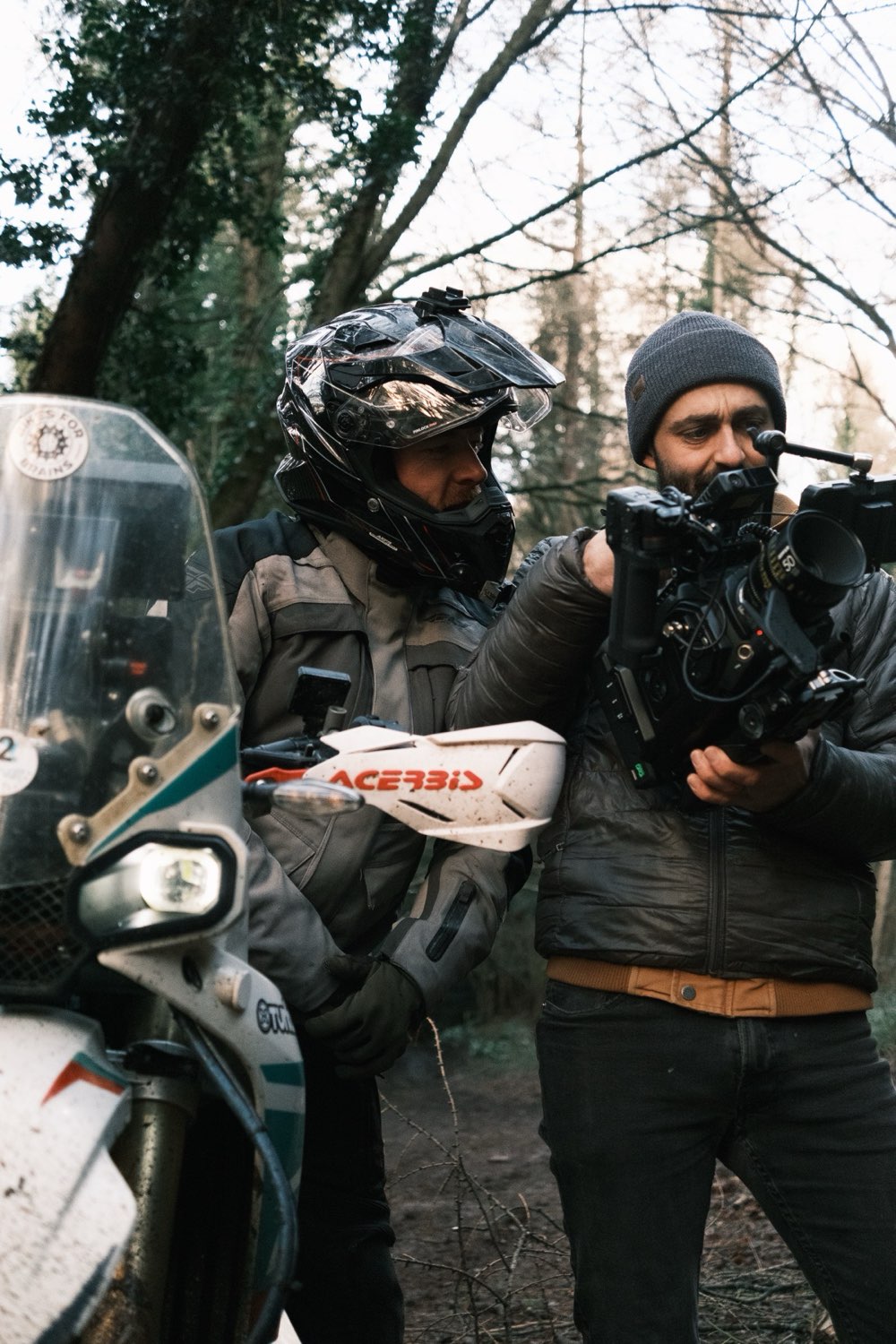
I use AI video tools. I use them regularly. I have generated footage with Sora, built rough edits with Runway, tested concept visuals in Veo and Pika. I am not writing this from a position of fear or ignorance. I am writing it because the question I hear most often from clients right now is some version of: "Do we even need a videographer any more, or can we just use AI?"
The honest answer is: it depends entirely on what you are making, who it is for, and what you need the video to actually do.
That is not a cop-out. It is the reality. AI video tools are genuinely impressive for certain applications and completely useless for others. The problem is that most of the conversation around this topic is polarised. You either get AI evangelists who think the entire film industry is six months from collapse, or you get defensive filmmakers pretending the technology does not exist. Neither position is helpful if you are a marketing manager trying to decide how to spend your video budget.
So here is my honest breakdown, as someone who shoots professionally and uses AI tools in my workflow.
What AI video tools actually do well
Let me give credit where it is due. The current generation of AI video tools, particularly Sora and Runway Gen-3, can produce footage that would have been impossible to generate this quickly even two years ago. Here is where they genuinely shine:
- Concept visualisation. If you are pitching an idea to a client and need to show what a mood, a setting, or a visual style might look like before committing to a full production, AI-generated footage is excellent for this. I have used Sora to build mood reels for pre-production meetings. It saves time and it gives clients something concrete to react to instead of a written description.
- Stock-style footage. Generic aerial shots of cities, abstract textures, atmospheric establishing shots. If you would previously have bought this from a stock library, AI can generate something similar and more tailored to your needs. The quality is often good enough for background footage in presentations, social content, or internal communications.
- Rapid iteration for social content. When you need ten variations of a visual concept for A/B testing on social media, AI can produce options faster than any human editor. For brands that are producing high volumes of short-form content, this is a genuine productivity gain.
- Motion graphics and abstract visuals. AI tools are strong at generating fluid, abstract visual content. Think animated backgrounds for websites, generative art for stage visuals, abstract transitions for presentations. This is an area where AI does not need to replicate reality, so its limitations matter less.
What AI video tools cannot do
Here is where the conversation gets more interesting, because the limitations are not just technical. Some of them are fundamental.
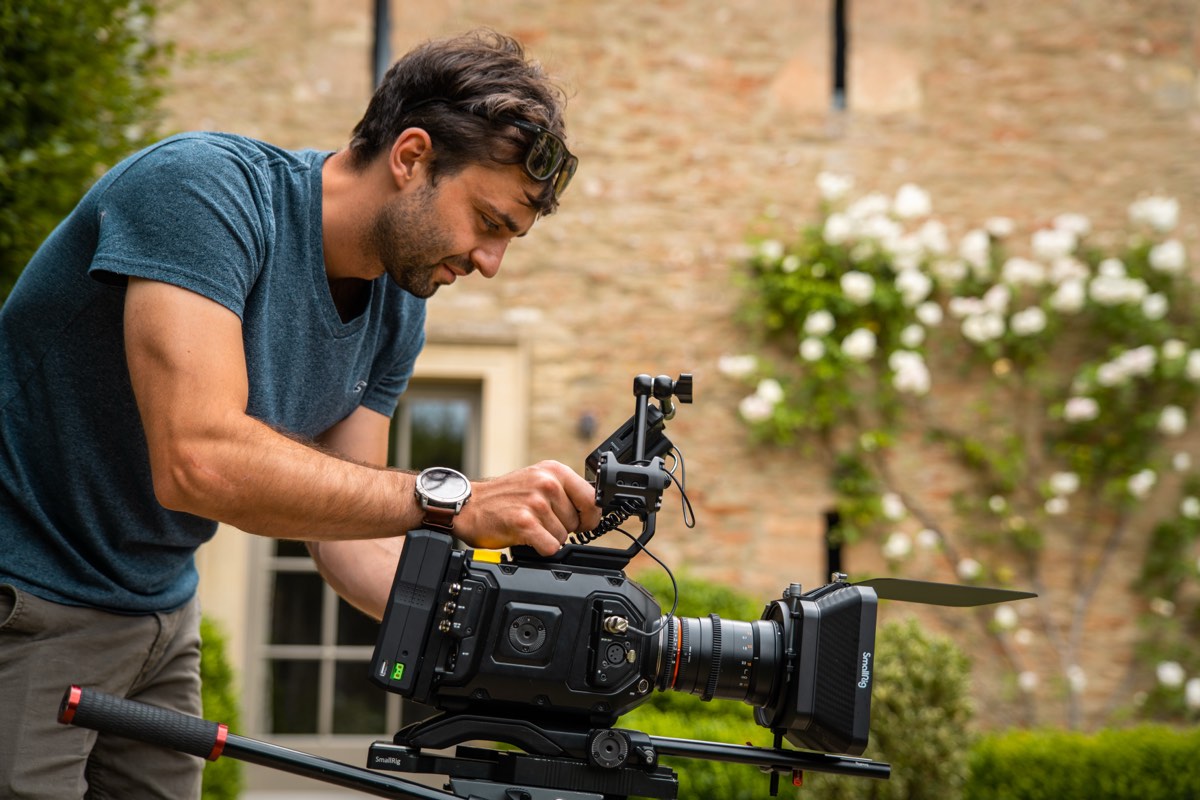
Film real people in real locations. This is the most obvious one and it still needs saying. If you need a testimonial from your CEO, a tour of your factory, footage of your event, or interviews with your customers, AI cannot help you. These things require a person with a camera to physically be somewhere. No amount of generative AI changes this. Your actual office, your actual team, your actual product in someone's actual hands. AI cannot fabricate that, and if it could, your audience would know.
Capture genuine emotion. I shot a recruitment film last year where the best moment in the entire piece was an unscripted laugh between two colleagues during what was supposed to be a serious interview. That moment sold the company culture more effectively than anything in the brief. You cannot prompt that. You cannot generate it. You can only be there with a camera when it happens, and you have to be good enough to recognise it and capture it properly when it does.
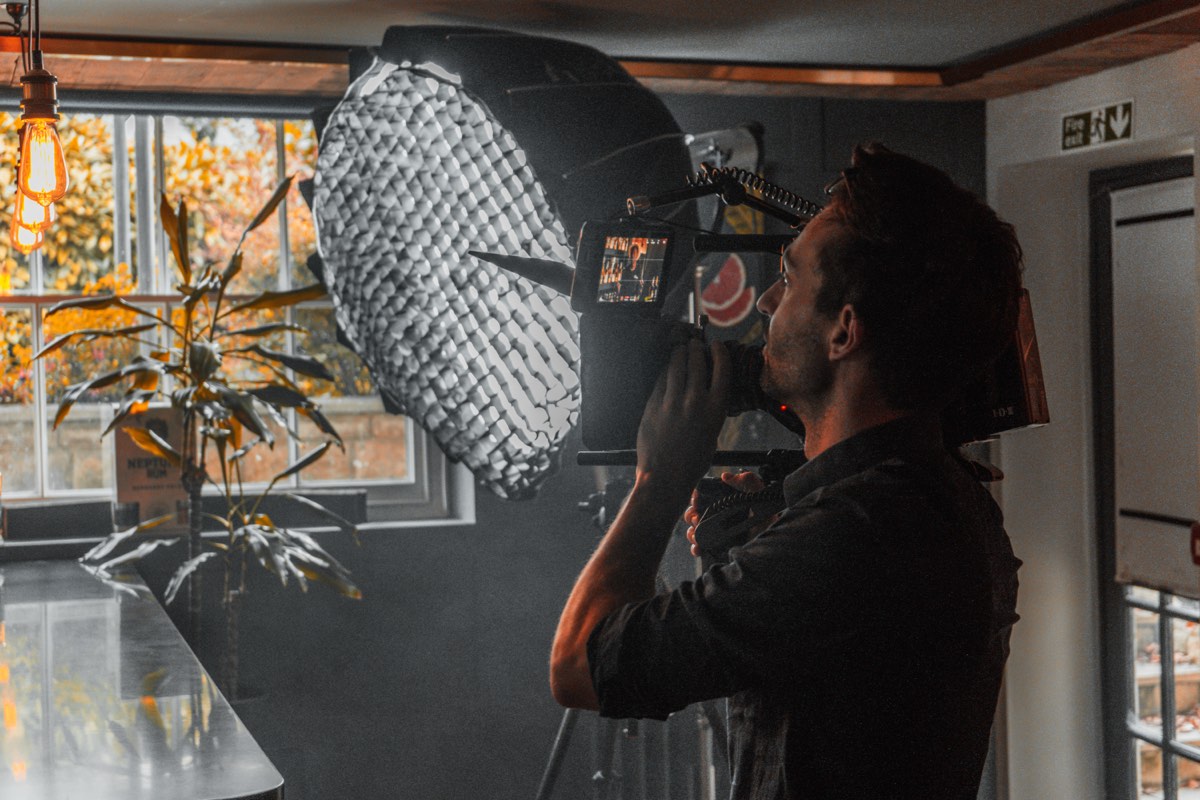
Light a real space. AI-generated footage has a particular look. It can mimic cinematic lighting in a general sense, but it cannot solve the specific problem of making your particular meeting room, warehouse, or reception area look good on camera. Real lighting is about understanding the physics of a specific space and bringing the right equipment to control it. I carry a full Aperture lighting package on every shoot because the difference between controlled light and available light is the difference between corporate video that looks professional and corporate video that looks like it was recorded on a webcam.
Maintain consistency across a campaign. If you are producing a series of videos over several months for the same brand, you need visual consistency. Same colour palette, same shooting style, same lighting approach, same feel. AI tools generate each piece of content independently. There is no memory of what came before. A human videographer builds a visual language for your brand and maintains it across every piece of content.
The legal question nobody talks about
This is a significant issue for corporate clients specifically. If you generate a video using AI and it includes faces, environments, or elements that resemble real people, real places, or copyrighted material, who is liable? The legal frameworks around AI-generated content are still being established. Most large organisations I work with have compliance teams that are not comfortable signing off on AI-generated content for external communications. This is not paranoia. It is reasonable risk management.
When I shoot footage for a corporate client, the rights are clear. The client owns the footage. Every person on camera has signed a release. Every location has been cleared. Every piece of music is licensed. That chain of clearance does not exist for AI-generated content, and for regulated industries, that is a deal-breaker.
The cost comparison is misleading
The obvious argument for AI video is cost. Why pay a videographer when you can generate footage for a fraction of the price? This argument falls apart quickly when you look at what you are actually comparing.
If you need generic footage to fill a slide deck, yes, AI is cheaper than hiring anyone. But you were never going to hire a videographer for that. You were going to use stock footage or shoot it on a phone. AI is competing with the bottom of the market here, not with professional production.
If you need a brand film, a testimonial series, event coverage, or a product launch video, the cost of AI is zero because AI cannot produce it. The comparison does not apply. You are not choosing between AI and a videographer. You are choosing between hiring a videographer and not having the content at all.
The real question is not "can AI do this cheaper?" It is "what do I actually need this video to do, and what is the right tool for that job?"
Where I use AI in my own workflow
I want to be specific about this because I think it matters. I am not anti-AI. I use these tools where they make my work better or faster.
In pre-production, I use AI to generate mood boards and storyboard visuals. When a client sends me a brief and I want to show them what a particular look or setting might feel like, I can build a visual reference in Sora or Runway in an hour instead of spending half a day pulling stills from other people's work. This improves the conversation with the client and helps us arrive at a shared vision faster.
In post-production, I use AI-assisted editing tools for rough assembly, transcription, and caption generation. These are genuine time-savers. What used to take hours of manual work now happens in minutes. This means I can spend more of my editing time on the creative work that actually matters: the pacing, the storytelling, the colour grade, the sound design.
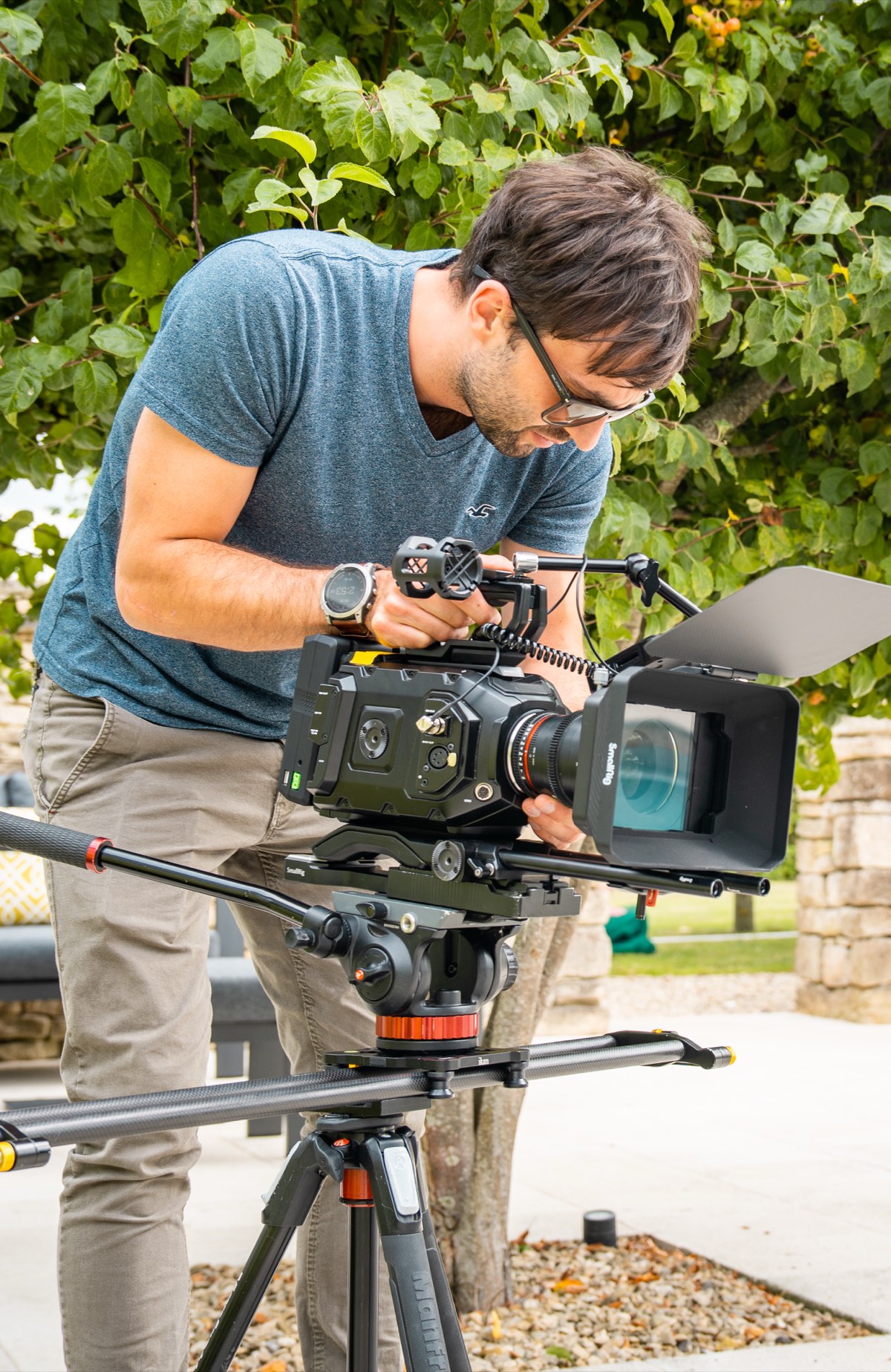
What I do not use AI for is the production itself. When I am on set with a camera, every decision is human. Where to put the light. When to roll. How to frame the subject. How to make someone comfortable enough to be honest on camera. How to respond when the plan falls apart and something better presents itself. That is the work that AI tools are not even attempting to replicate, because it requires physical presence, interpersonal skill, and real-time judgement.
Will AI video tools improve? Obviously
They will get better at generating realistic footage. They will get better at consistency. They will get better at following complex prompts. The quality ceiling will keep rising. I am not going to pretend otherwise.
But the improvements that matter for professional video production are not about image quality. They are about the things that happen before and during a shoot. Understanding a client's brand deeply enough to translate it into a visual language. Building rapport with an interview subject so they say something real instead of something rehearsed. Adapting on the day when the weather changes, the location is not what you expected, or the schedule shifts. Bringing creative judgement to thousands of micro-decisions across a production day.
These are not technical problems that better algorithms will solve. They are human skills that require human presence. The best AI video tool in the world cannot walk into a room, read the energy, and decide to change the interview order because the nervous subject needs more time to settle in. That is the job. That is what you are actually paying for when you hire a videographer.
The honest conclusion
If you need generic visual content at scale, use AI. It is good at that and getting better.
If you need video that features real people, real locations, real emotion, and carries the weight of your brand, hire a human. Not because of sentiment. Because AI literally cannot produce what you need.
The smartest approach, and the one I am seeing the best results from, is to use both. Let AI handle the parts of the workflow where it excels: concept development, rough visualisation, caption generation, social content variations. Let a videographer handle the parts that require physical presence, creative judgement, and the ability to connect with people.
That is not a compromise. It is just the most effective way to produce video content in 2026.
If you want to talk about what a real production looks like and where AI might fit into your content strategy, get in touch. For larger projects requiring multiple crew, Singularity Film handles full-scale production.
Related
- Videographer vs Production Company: Which Do You Need?
- Brand Film Production in Bristol
- Videographer Bristol: Services and Day Rate
Need video that AI can't make?
Real locations. Real people. Real results. Cinema cameras, full lighting, clean audio.
Get in touch