Someone in your organisation has already asked the question. Maybe it was in a budget meeting. Maybe it was in a Slack channel. Maybe it was your CEO after watching a Sora demo. The question is always some version of: "Do we still need to pay for a videographer, or can we just use AI to make our videos now?"
I understand why the question is being asked. AI video tools have improved rapidly. Sora, Runway Gen-3, Veo, Pika. They can generate impressive footage from text prompts. If you have never commissioned professional video before, the output looks compelling. If your experience of video production is limited to watching the final deliverable, it is reasonable to wonder whether the human in the middle is still necessary.
I am going to make the case that for corporate clients specifically, the answer is unambiguously yes. And I am going to make it on practical grounds, not emotional ones. This is not about protecting my livelihood. It is about understanding what your video content actually needs to do and whether AI can deliver it.
Compliance and legal sign-off
If you work in financial services, healthcare, pharmaceuticals, education, or any regulated industry, your marketing content goes through compliance review before it is published. Your legal team needs to know that every claim in the video is substantiated, that every person appearing on camera has given consent, that every location has been cleared for commercial use, and that the content does not infringe on any third-party rights.
AI-generated video creates immediate problems for this process. Who owns the generated footage? What was the training data, and does it include copyrighted material? If the generated footage includes realistic-looking people, are they based on real individuals? Can you provide a model release for a person who does not exist? These are not hypothetical concerns. Legal teams at several of the corporate clients I work with have already flagged AI-generated content as a compliance risk and required that external video content be produced using traditional methods with full documentation.
When I deliver footage to a corporate client, I provide a full paper trail. Model releases for every person on camera. Location agreements. Music licences. Equipment insurance certificates. Risk assessments for every shoot location. This documentation is not bureaucracy for its own sake. It protects the client. AI-generated content offers none of this, and until the legal framework catches up, that is a material risk for any organisation that takes compliance seriously.
Brand consistency requires a human eye
Your brand is not a colour palette and a font. It is a feeling. It is how your organisation presents itself visually across every touchpoint. When you commission a series of videos over the course of a year, they need to look like they belong together. Same visual language, same lighting style, same pacing, same tone.
AI tools generate each piece of content independently. There is no persistent memory of your previous videos. There is no understanding of why the lighting in your Q1 brand film was warm and directional while your competitor's was flat and cool. There is no ability to reference the specific shade of green in your brand guidelines and match it to the colour temperature of the key light.
I have clients I have worked with for years. I know their brand inside out. I know which of their offices films well and which does not. I know that their CEO looks best with the camera slightly above eye level and to the left. I know that their brand tone is authoritative but warm, and that means handheld is wrong for them but a locked-off static frame is too rigid. These are accumulated insights that inform every creative decision across every shoot. No AI tool has access to this knowledge because it does not exist in a database. It exists in a working relationship.
Your employees are real people, and they need to be filmed as real people
Recruitment videos. Internal communications. Leadership messages. Team profiles. Culture films. These are the bread and butter of corporate video, and they all share one requirement: real people from your organisation, on camera, being authentic.
You cannot generate your actual employees using AI. That should be obvious, but it needs stating because I have seen proposals suggesting exactly this. Generate "representative" employees using AI tools instead of filming real ones. Put aside the ethical problems with this for a moment and consider the practical ones. Your team will see the video. They will know those are not real colleagues. Your candidates will see the recruitment film. They will arrive for an interview and find that the "team" in the video does not exist. Your clients will watch the case study and wonder why the "project manager" discussing the work does not appear on your LinkedIn page.
Authenticity in corporate video is not optional. It is the entire point. A recruitment video works because potential candidates see real people in a real workplace and can imagine themselves there. A testimonial works because a real client is speaking from genuine experience. An internal comms message from the CEO works because the team can see their leader speaking directly to them. Remove the reality and you remove the value.
Event coverage cannot be generated
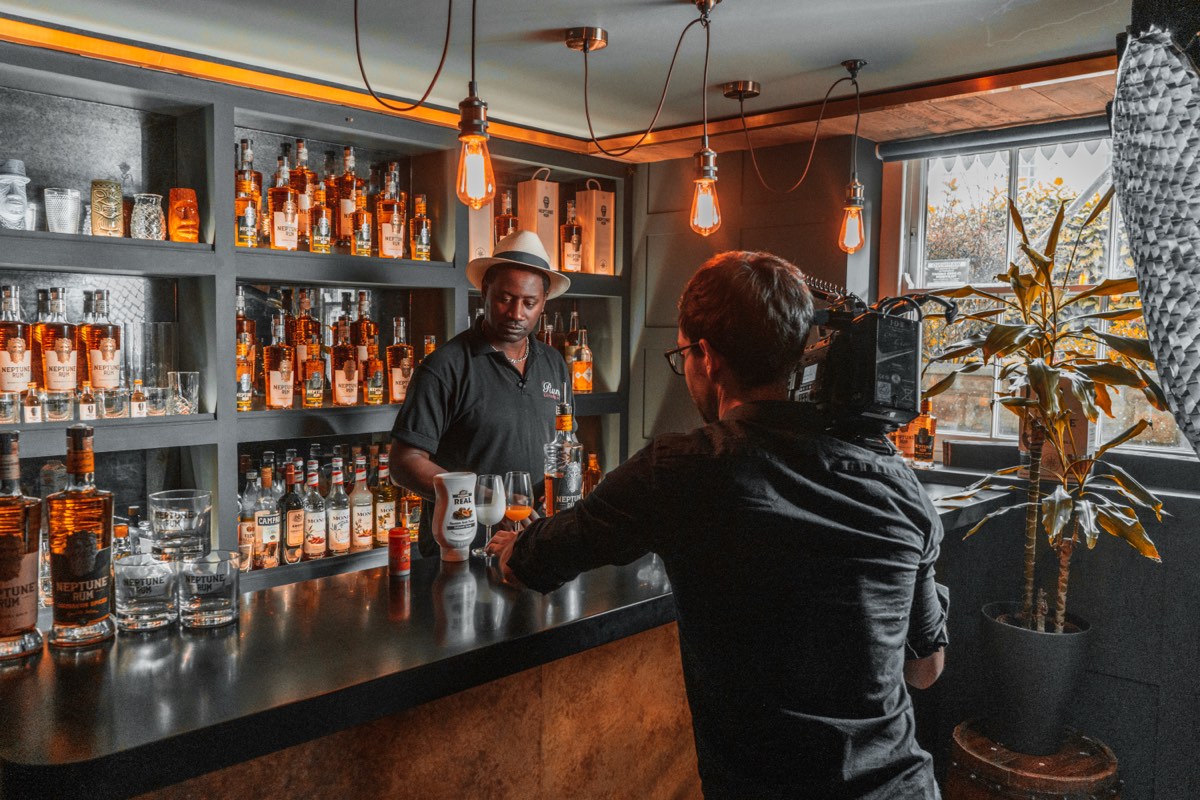
Your annual conference. Your product launch. Your awards ceremony. Your team away-day. These events happen once. They happen in real time. And if you want video content from them, someone has to be there with a camera.
I have covered corporate events ranging from ten-person board meetings to thousand-person conferences. The work involves anticipation: knowing where to position yourself to capture the keynote speaker's best moment, moving quickly to grab audience reactions, finding the candid interactions in the networking breaks that tell the story of the event better than any planned speech.
This is time-sensitive, location-specific work that requires physical presence and real-time creative judgement. AI cannot attend your event. It cannot capture the spontaneous standing ovation, the handshake that closed the deal, or the team celebration after the product demo worked flawlessly. These moments are the reason you produce event video in the first place, and they exist only in the real world.
Testimonial authenticity is non-negotiable
Client testimonials are among the most effective forms of corporate marketing content. They work specifically because they feature a real person from a real company describing a real experience. The value is in the credibility. A prospective client watches the testimonial and thinks: this person is like me, they had a similar problem, and this company solved it for them.
The moment you introduce any artificial element into a testimonial, you destroy the thing that makes it work. It does not matter how photorealistic AI-generated footage becomes. If the viewer suspects for even a moment that the person speaking is not real, the testimonial has failed. And in 2026, audiences are increasingly attuned to generated content. The uncanny valley is not getting smaller. People are getting better at spotting it.
Beyond perception, there is a straightforward honesty issue. Presenting AI-generated content as real testimony is deceptive. For regulated industries, it may be illegal. For any brand that values its reputation, it is a risk that offers no upside.
The question is not whether AI video looks good enough. It is whether your audience will trust it. For corporate content, trust is everything.
Recruitment video needs to be real
Hiring is expensive. A bad hire is more expensive. Recruitment video exists to attract the right candidates and filter out the wrong ones by giving an honest, compelling view of what it is like to work at your organisation.
That only works if the video shows reality. Real offices. Real colleagues. Real projects. Real culture. If a candidate joins your company because they were attracted by a recruitment film, and the reality does not match what they saw, you have created a retention problem. The video needs to be aspirational but truthful. It needs to show the best version of what your workplace actually is, not a fabricated version of what it is not.
I shoot recruitment content by spending time in the workplace before I roll the camera. I talk to people. I find the stories that will resonate with candidates. I look for the genuine moments of collaboration, focus, and camaraderie that define the culture. Then I capture them in a way that is visually compelling and editorially honest. This is work that requires a human understanding of your organisation and the ability to translate that understanding into footage.
AI content looks generic. Yours should not.
Here is the most practical argument of all. AI video tools are available to everyone. Your competitors can generate the same footage you can. If everyone is using the same tools with similar prompts, the output converges toward the same aesthetic. Polished, smooth, generic. It looks competent and says nothing specific about any particular company.
Custom video production is the opposite. It is specific to your people, your spaces, your story. It looks like you and nobody else. In a market where AI-generated content is proliferating, the brands that stand out will be the ones producing content that is unmistakably real and unmistakably theirs.
I have seen this play out already. A client in the professional services sector told me they switched back to commissioning real video production after six months of experimenting with AI-generated content for their social channels. The engagement numbers told the story. Posts featuring real team members, real office footage, and real client interactions outperformed AI-generated content by a factor of three. Audiences could tell the difference, even if they could not articulate exactly what it was.
The investment case
Professional video production costs more than generating content with AI tools. That is true. But the comparison is misleading because you are not comparing like with like. You are comparing content that features your real people, your real locations, and your real story with content that features none of those things.
The ROI on corporate video is well documented. Companies that invest in professional video for recruitment reduce their cost-per-hire. Brands that use video testimonials shorten their sales cycle. Organisations that produce regular thought leadership video content build authority in their sector. These outcomes come from content that is credible, specific, and authentic. AI-generated content, at its current capability, does not deliver the same results because it does not carry the same weight.
That does not mean AI has no role. Use AI for internal content where the bar is lower. Use it for concept development. Use it for social media experiments. But for the content that represents your brand publicly, that recruits your people, that closes your deals, and that builds your reputation, invest in real production. The results justify the spend.
If you are making the case internally for professional video production and want to discuss scope, budget, and deliverables, get in touch. For multi-location or multi-day campaigns, Singularity Film can build the right production around the brief.
Related
- The Future of Videography: Where AI Helps and Where It Fails
- Corporate Videographer Bristol
- Videographer Gloucestershire: Services and Day Rate
Need corporate video that works?
Real people. Real locations. Professionally produced content that builds trust.
Get in touch