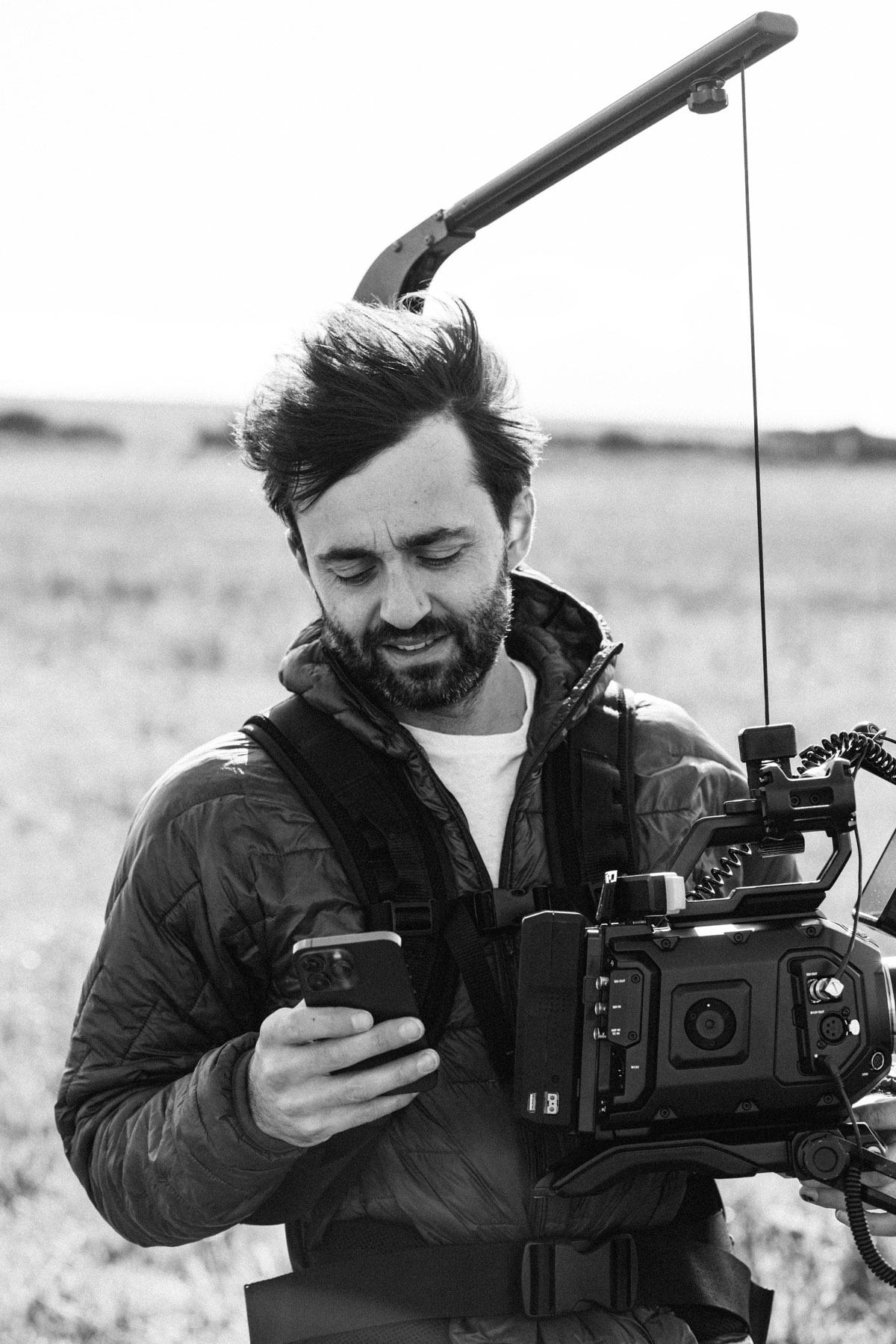
Predictions about the future of any industry are usually wrong. I am not going to pretend I know exactly where videography will be in five years. What I can do is describe what I am seeing right now on the ground, as someone who shoots commercially every week and has been integrating AI tools into my workflow for the past two years. The patterns are becoming clear, even if the final destination is not.
The short version: AI is changing how I prepare for shoots and how I work in post-production. It is not changing what happens on the production day itself. And the biggest shifts I am seeing have less to do with technology and more to do with what clients expect from the content they commission.
Pre-production has already changed
This is where AI has made the most tangible difference to my work, and I think most filmmakers who are honest about it would say the same. The pre-production process used to involve a lot of manual reference gathering. You would pull stills from films, collect links to videos with the right feel, build mood boards by hand, write shot lists from scratch.
Now I use Sora and Runway to generate visual references directly from the brief. A client tells me they want a brand film with a warm, documentary feel, handheld, natural light, lots of texture. Instead of sending them links to other people's work and saying "something like this," I can generate a rough visual that shows the look we are discussing. It is faster, it is more specific, and it gives the client something concrete to react to before we commit to anything.
I use AI for rough storyboarding as well. For narrative or scripted work, being able to generate frame-by-frame visual references from a script saves hours of drawing or searching for reference images. The output is not polished enough to show a client as a finished storyboard, but as a working document for planning a shoot, it is extremely useful.
Script drafts are another area. I do not use AI to write final scripts, but I do use it to generate first-draft structures from a creative brief. It gives me a framework to react to and edit, which is faster than starting from a blank page. The final language and tone are always mine, but the structural starting point comes from AI more often than not.
The production day has not changed
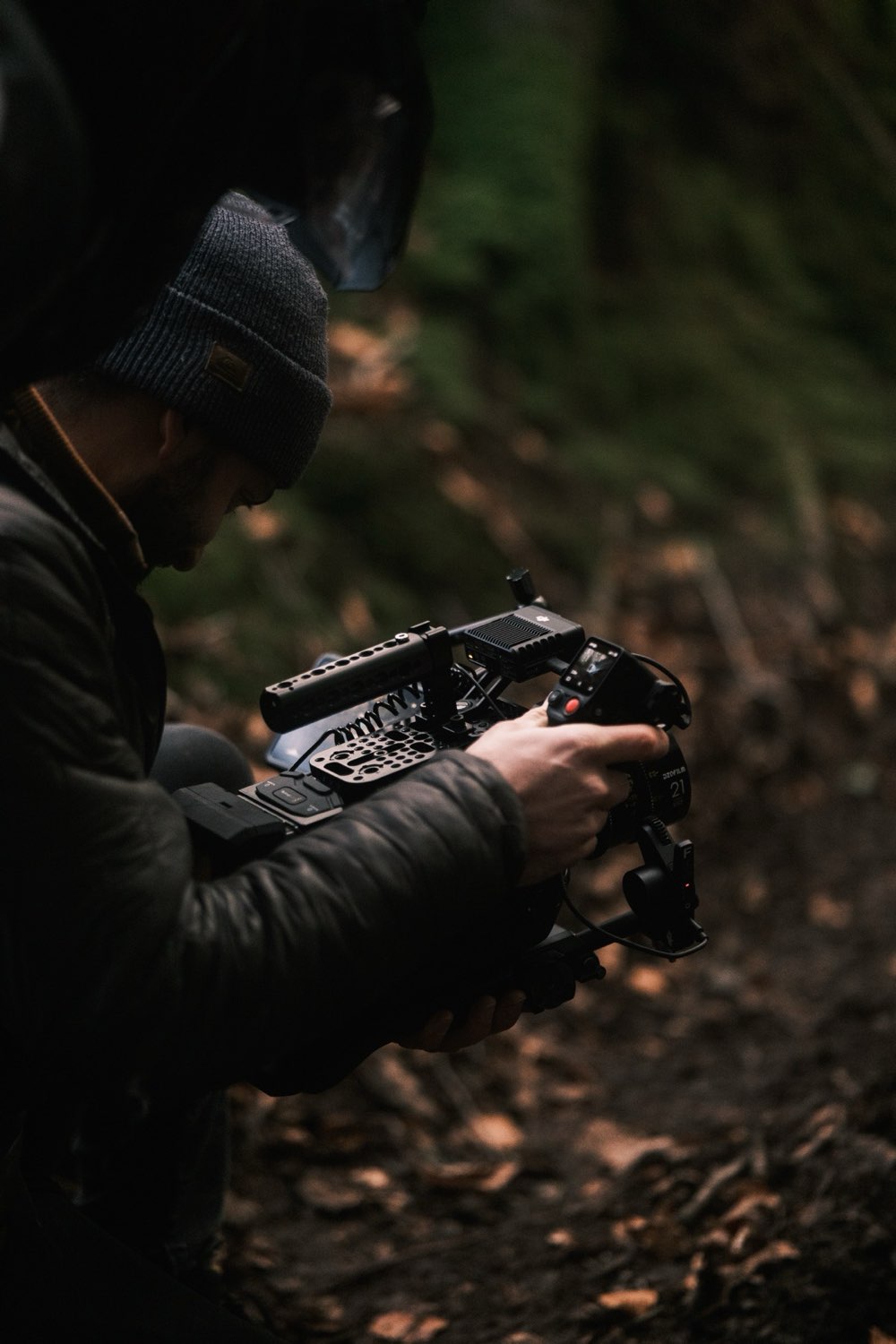
This is the part that I think gets lost in the conversation about AI and filmmaking. When the shoot day arrives, someone still has to be there. With a camera. With lighting. With audio equipment. With the ability to manage people, solve problems, and make creative decisions in real time.
No AI tool can set up a three-point lighting rig in a corporate boardroom. No AI tool can adjust the white balance when the client turns on the fluorescent overheads that were supposed to stay off. No AI tool can notice that the interview subject keeps glancing nervously at the lens and suggest repositioning the camera to a longer focal length so they feel less observed.
The production day is physical work. It is carrying cases, rigging lights, running cables, adjusting stands, checking monitors, managing timelines, directing talent. It is also creative work that happens in the moment: choosing to push in on a close-up during an emotional answer, or pulling back to a wide shot when two people in a conversation start to mirror each other's body language. These decisions happen in fractions of a second and are based on years of experience watching how humans behave on camera.
I do not see any technological development that changes this reality. Even the most optimistic projections for robotics and autonomous systems do not describe anything close to what a skilled camera operator does on a production day. The job is too variable, too interpersonal, and too dependent on real-time creative judgement.
Client expectations are shifting fast
This is where the real pressure is, and it has less to do with AI directly than with the broader acceleration of content culture. Here is what I am hearing from clients more frequently than I was even twelve months ago:
- "We need more formats from the same shoot." A single shoot day used to produce one deliverable. Now clients want a hero film, a 30-second cut, a 15-second version, vertical crops for Stories and Reels, still frames for social, and sometimes a podcast-style audio version from the interview footage. This means planning the shoot differently from the start: framing for multiple aspect ratios, recording clean audio that works as standalone content, and capturing enough coverage to support multiple edits.
- "Can we turn it around faster?" The expectation for turnaround times has compressed significantly. Clients used to accept two to three weeks for a polished edit. Now they want a rough cut within days, sometimes hours for event content. This is where AI editing tools genuinely help. I use AI-assisted assembly and transcription to get rough cuts out faster than I could manually. But the creative edit, the colour grade, the sound design, still take human time.
- "We want to publish more often." The shift from campaign-based content to always-on content is well established. Brands want to publish video weekly, sometimes daily. This changes the economic model for videographers. Instead of occasional high-budget productions, many clients want ongoing retainer relationships where they get a steady stream of content from regular shoot days.
Long-form content is coming back
This is a trend I find genuinely interesting. For the past five years, the dominant narrative has been that attention spans are shrinking, everything needs to be short, and if your video is longer than thirty seconds nobody will watch it. That narrative was always oversimplified, and it is now being actively contradicted by the data.
YouTube's own reports show that watch time for long-form content continues to grow. Podcasts, which are essentially audio long-form, are one of the fastest growing media categories. Documentary series on streaming platforms are performing well. The audience for in-depth, long-form content has not disappeared. It has moved to different platforms.
What this means for videographers is that the skills required are expanding, not contracting. Yes, you still need to be able to produce punchy, short-form content for social platforms. But there is also growing demand for well-produced long-form content: mini-documentaries, extended interviews, behind-the-scenes series, branded podcast video. This kind of content requires strong storytelling ability, sustained visual quality across longer runtimes, and the editorial judgement to maintain audience attention over ten or twenty minutes instead of ten or twenty seconds.
AI is not particularly good at long-form content. Its strength is in generating short, self-contained clips. The longer the format, the more important narrative structure, pacing, and editorial coherence become, and these are areas where human judgement is still essential.
The videographers who survive will be the ones who adapt
I want to be direct about this. The videography market is changing, and some people in this industry are going to struggle. But it will not be because AI replaced them. It will be because they refused to adapt their workflow, their business model, or their skill set to meet changing client needs.
The videographers who will thrive are the ones who:
- Use AI tools where they genuinely add value. Not as a gimmick. Not to cut corners. But to speed up pre-production, streamline post-production, and deliver more content from the same shoot day. If you are not using AI transcription, AI-assisted rough cuts, and AI-generated visual references in your pre-production, you are working slower than you need to.
- Offer more deliverables from fewer shoot days. Clients want efficiency. A single well-planned shoot day should produce enough footage for a hero film, multiple social cuts, stills, and potentially long-form content. Planning for this from the start is a skill that separates working professionals from people who show up and point a camera.
- Build ongoing relationships, not one-off projects. The retainer model works better for clients who need consistent content and better for videographers who want predictable income. I have several clients on monthly retainers where I shoot one or two days a month and produce their ongoing content from those days. It is more sustainable than chasing individual projects.
- Invest in the skills AI cannot replicate. Lighting, directing, storytelling, interpersonal rapport, technical problem-solving on location. These are the skills that will remain valuable regardless of how good generative AI becomes. The camera operator who can walk into any space and make it look cinematic in thirty minutes will always have work.
The threat to working videographers is not AI. It is complacency. The tools are changing. The client expectations are changing. Adapt or get left behind.
What stays the same
Someone still needs to tell the story. Someone still needs to understand the brief, translate it into a visual plan, show up with the right equipment, manage the production, direct the talent, capture the footage, and shape it into something that serves the client's objective. That process is the same whether you are shooting on 16mm film or a Blackmagic URSA 12K. The tools change. The craft does not.
The best video content has always been built on the same foundation: clear storytelling, strong visuals, authentic human moments, and a deep understanding of who the audience is and what they need to feel. AI can accelerate parts of the process, but it cannot replace the person at the centre of it.
If you are thinking about your video strategy for the rest of 2026 and want to talk about how to get the most out of your production budget, get in touch. For larger campaigns requiring a full production team, Singularity Film can build the right crew for the brief.
Related
- What AI Can't Do: The Case for Human Videography
- AI Video vs Hiring a Videographer: An Honest Comparison
- Hire a Freelance Videographer
Future-proof your video content
AI-augmented workflow. Human craft. Real results from every shoot day.
Get in touch