You have seen them. The testimonial videos where someone sits in front of a branded backdrop, stares into the lens, and recites something that was clearly written for them by the marketing department. Their eyes flick down to a script taped below the camera. Their voice is flat. Their body language says "I am doing this because my boss asked me to." The viewer clicks away within three seconds and the video does nothing for anyone.
Testimonial video is one of the most effective forms of commercial content when it is done well. A genuine person describing a genuine experience with a product or service is more persuasive than almost any amount of polished brand messaging. But the gap between a testimonial that converts and one that actively damages your credibility is almost entirely a question of technique. Not camera technique. Interview technique.
Why most testimonial videos fail
The problems tend to fall into three categories, and all of them are preventable.
They are scripted. The moment you hand someone a script, you lose the thing that makes testimonials valuable: authenticity. Even a good actor struggles to make scripted material sound natural. A normal person reading a marketing department's words sounds exactly like what they are: a normal person reading a marketing department's words. The viewer detects it instantly, and the trust is gone.
They are over-produced. Elaborate sets, dramatic music, heavy colour grading, motion graphics flying across the screen. All of this signals "advertisement" to the viewer, which is the opposite of what a testimonial should feel like. A testimonial should feel like a conversation you are overhearing. It should feel real. The production quality should be professional enough to not distract, but never so polished that it undermines the authenticity of the message.
The person is uncomfortable. Most people have never been filmed before. They do not know where to look, what to do with their hands, or how to speak at a natural pace when there is a camera pointed at them. If the videographer does not know how to manage this discomfort, the footage will show it. Stiff posture, rehearsed phrasing, nervous laughter. All of it reads as inauthentic on screen, even if what the person is saying is completely genuine.
The documentary approach
The approach I use for testimonials is borrowed from documentary filmmaking. The principle is simple: create conditions where the subject forgets they are being filmed and speaks naturally. This requires a specific set of techniques, and none of them involve a teleprompter.
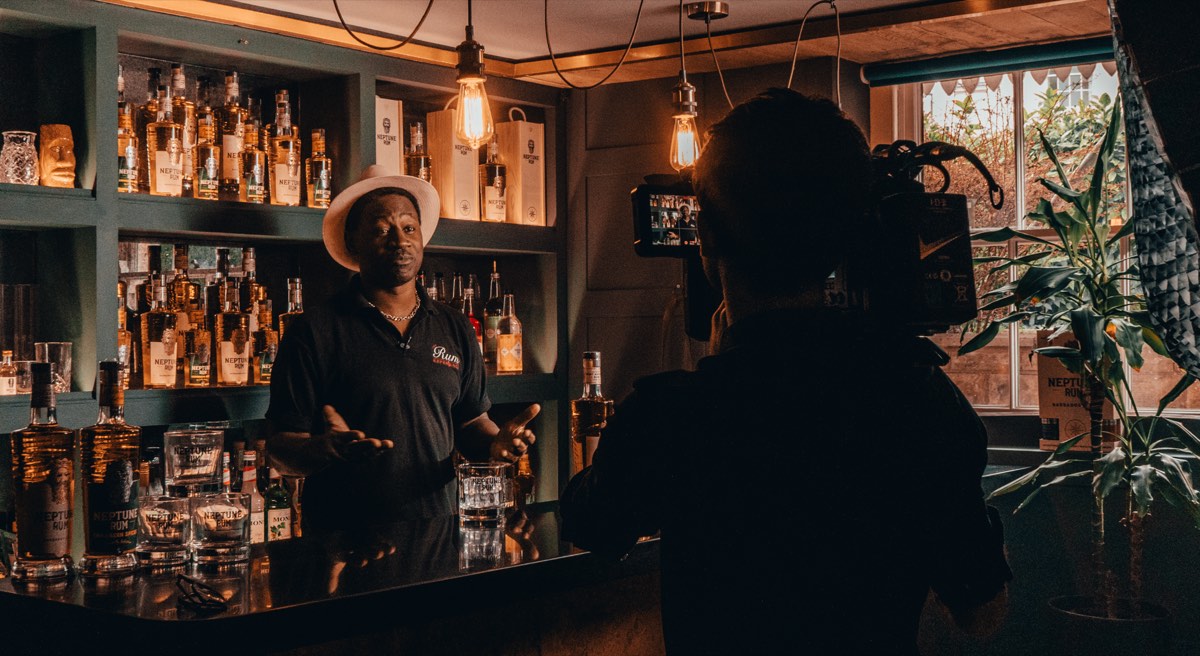
It is a conversation, not a performance. I sit next to the camera, just off the lens axis, and I talk to the person. Not interview them. Talk to them. I ask questions, I respond to their answers, I laugh when something is funny, I follow up on interesting points. The subject is looking at me, not the lens. They are having a conversation with a person, not performing for a machine.
I never show them the questions in advance. This is deliberate and it is the opposite of what most people expect. If you give someone the questions beforehand, they rehearse answers in their head. Those answers are edited, sanitised, and stripped of the natural pauses, qualifications, and tangents that make real speech sound real. I tell them the general topic areas so they are not blindsided, but the specific questions come fresh on the day.
The first five minutes are throwaway. I tell the subject this. The first few minutes of any interview are a warm-up. They are settling in, finding their voice, adjusting to the camera. I ask easy questions during this time. What is your role? How long have you been here? Tell me about the company. None of these answers will make the final cut, but they get the person talking and moving past the initial self-consciousness.
The questions that get genuine responses
The quality of a testimonial is determined almost entirely by the quality of the questions. Bad questions produce bad answers. Good questions produce moments of genuine reflection that are gold in the edit room.
Here are the questions I use, in roughly the order I ask them. Each one is designed to elicit a specific type of response.
"What was happening in your business before you started working with [company]?" This establishes context and the problem. It is an easy question because the person is describing their own experience. It also sets up the narrative arc: here is where we were, here is what changed.
"What made you decide to look for a solution?" This identifies the trigger point. Was there a specific moment, a frustration, a failed alternative? The more specific the answer, the more relatable it is to someone watching who is in the same position.
"What was your first impression when you started working with them?" This is a feeling question. It often produces the most natural, unguarded responses. People remember first impressions vividly, and describing them tends to bring out genuine emotion rather than corporate language.
"Can you describe a specific moment where you thought, 'this is working'?" Specificity is everything. A general statement like "they were great" means nothing. A specific story about a particular project, interaction, or result is compelling. This question forces the subject to recall a real event rather than summarise an overall impression.
"What would you say to someone who is considering working with them but has not made the decision yet?" This is the money question. It puts the subject in the role of advisor rather than endorser. They are speaking peer to peer, and the advice tends to be honest and direct because it is framed as helping someone else rather than promoting a brand.
"Is there anything I have not asked that you think is important?" Always ask this. Sometimes the best soundbite of the entire interview comes from an answer to this question, because the subject says the thing they have been wanting to say but did not know how to fit into the previous answers.
Never give your testimonial subjects a script. Brief them on the topic, tell them approximately how long it will take, and then have a real conversation. The difference in the footage is night and day.
Camera and lighting setup for testimonials
The technical setup for a testimonial should support the conversational feel, not fight against it. Here is what I typically use.
Camera position. I shoot on a relatively long lens (85mm to 135mm equivalent) at a wide aperture. This gives a shallow depth of field that separates the subject from the background, keeps the focus entirely on their face, and creates the soft, out-of-focus background you see in documentary interviews. The camera is on a tripod at the subject's eye level, slightly off to one side so the person is looking just past the lens rather than directly into it.
Lighting. A large softbox as the key light, positioned just above and to the side of where I am sitting. This ensures the light falls naturally on the subject's face from the direction they are looking. A subtle fill on the opposite side to keep the shadows from going completely black. A backlight to separate them from the background. The goal is to make the subject look good without making the lighting look like a production setup.
Audio. A wireless lavalier microphone clipped to the subject's clothing, positioned about 15 to 20 centimetres below their chin. This captures clean, close dialogue regardless of the room acoustics. I also run a shotgun microphone on a stand above the frame as a backup. Audio quality is non-negotiable for testimonials. If the viewer cannot hear the person clearly, nothing else matters.
Background. Simple and relevant. The subject's workplace, their office, their site. Not a branded pull-up banner. Not a plain white wall. The background should give context about who this person is and where they work. A slightly messy desk with real objects on it is more believable than a perfectly styled set.
How long should a testimonial be?
The interview itself should run 15 to 25 minutes. This gives the subject time to relax, go deep on their answers, and produce multiple usable soundbites. You will not use most of it. That is the point. You are mining for the two or three genuinely strong moments that will make the final cut.
The finished testimonial video should be between 60 and 120 seconds for most applications. This sounds short, but it is long enough to tell a complete story (problem, solution, result) and short enough that people will actually watch to the end. If you have a strong interview, you can often produce a longer version (2 to 3 minutes) for your website and shorter cuts (15 to 30 seconds) for social media and ads from the same footage.
Resist the urge to make it longer. A tight 90-second testimonial with strong soundbites and a clear narrative will always outperform a rambling 4-minute version that includes every vaguely positive thing the person said. Edit ruthlessly. Keep only the moments that feel genuinely honest and specific.
Where to use testimonial videos
A well-made testimonial is one of the most versatile pieces of content you can produce. Here is where each format works best.
Website. The full-length version (60 to 120 seconds) sits on your homepage, your case studies page, or a dedicated testimonials page. It is there for people who are actively evaluating your business and want to hear from someone who has already worked with you. Position it near a call to action so the viewer can act on the credibility they have just witnessed.
Social media ads. Short cuts (15 to 30 seconds) pulled from the strongest moments of the interview. These work well as paid social content because they feel different from polished brand ads. A real person speaking honestly stands out in a feed full of designed graphics and stock footage. The organic feel is a feature, not a limitation.
Sales proposals. When you send a proposal to a potential client, include a link to a relevant testimonial from a similar client or industry. This is far more persuasive than a written quote. The prospect can see the person, hear their tone of voice, and judge for themselves whether the endorsement is genuine.
LinkedIn and organic social. Testimonial clips perform well as organic content because they generate engagement. People tag the person featured, the featured person shares it with their network, and the content reaches audiences you would not access through your own following alone.
Email marketing. A testimonial thumbnail with a play button in an email consistently outperforms text-only testimonials in terms of click-through rates. Link it to a landing page where the full video plays.
Common mistakes to avoid
Even with good technique, there are pitfalls that can undermine a testimonial shoot.
- Filming too many people in one day. Three testimonials in a day is comfortable. Four is manageable. Five or more and the quality drops because you are rushing setups, cutting conversations short, and the subjects can sense the time pressure. Schedule generously.
- Choosing subjects who are not enthusiastic. A lukewarm testimonial is worse than no testimonial. If someone agrees to participate out of obligation rather than genuine enthusiasm, it will show. Choose people who genuinely value the relationship and have specific things to say about it.
- Asking yes-or-no questions. "Were you happy with the result?" produces "Yes." That is unusable. "What happened after the project was delivered?" produces a story. Frame questions to demand narrative answers.
- Editing out the pauses. Natural speech includes pauses, "ums," and moments of thought. A testimonial where every pause is cut and every sentence is polished to efficiency sounds edited. Leave some of the natural rhythm in. It sounds more real because it is more real.
- Adding music that is too dramatic. A gentle, unobtrusive music bed can support a testimonial. A sweeping cinematic score makes it sound like a car advertisement. The music should be felt, not heard. If you notice the music, it is too loud or too dramatic.
What makes a testimonial convert
After filming hundreds of testimonials across different industries, the ones that actually drive business share a few consistent qualities. The person is specific rather than general. They describe a real problem, a real moment, a real result. They sound like they are talking to a friend, not performing for an audience. The production is clean and professional but does not draw attention to itself. And the video is short enough that someone watches to the end.
None of this is complicated. But it requires intentionality at every stage: choosing the right people, asking the right questions, creating the right environment, and editing with discipline. The testimonial that feels effortless on screen was anything but effortless to produce.
If you want to produce testimonial content for your business, get in touch. I handle the full process from planning through to delivery. For testimonial campaigns involving multiple locations and a coordinated production schedule, Singularity Film manages that scale of work.
Related
- Recruitment video production
- What happens on a corporate video shoot day
- Videographer Gloucestershire
Need testimonial videos?
Genuine responses, professional production, footage that converts. Let's talk.
Get in touch