Hospitality is a feeling. The warmth of a well-lit dining room. The sound of a cocktail being mixed. The view from a hotel room at dawn. These are sensory experiences, and video is the only medium that can communicate them before someone walks through the door. A photograph shows what a place looks like. A video shows what it feels like to be there. For hotels, restaurants, bars, and tourism businesses, that distinction is the difference between a booking and a scroll-past.
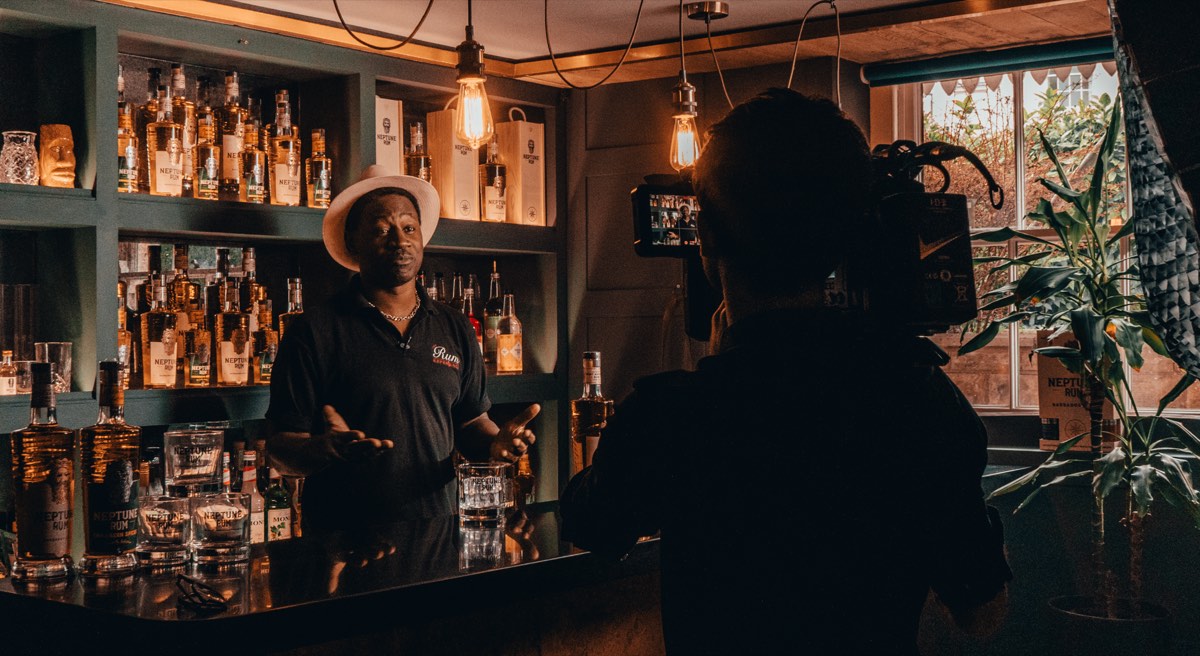
I have filmed for hospitality brands across the South West, including bar and product work for Neptune Rum, and the challenges are consistent. The spaces are beautiful but hard to light. The atmosphere is everything but difficult to capture without disrupting the very thing you are trying to document. The food needs to look better on screen than it does on the plate, which is saying something when the plate is already good. Here is what works, what does not, and how to approach hospitality video so it actually drives bookings.
What good hospitality video looks like
The best hospitality video is atmosphere-driven. It is not a virtual tour. It is not a talking head telling you about the facilities. It is an experience condensed into two minutes that makes the viewer feel something. They should finish watching and think: I want to be there.
This means the footage needs to prioritise the things that create atmosphere in real life. The texture of materials. The way light falls across a table. Steam rising from a dish. Condensation on a glass. The movement of staff who know what they are doing. A fire burning. Candles flickering. Rain on a window with a warm interior beyond it. These details are what separate a hotel from a hotel room, a restaurant from a canteen.
The shooting approach is close, intimate, and slow. Wide establishing shots set the scene, but the detail shots sell the experience. I spend a significant portion of any hospitality shoot on macro and close-up work: the grain of a wooden table, the pour of a spirit, the garnish being placed on a plate. These are the moments that trigger a sensory response in the viewer, even through a screen.
The lighting problem in hospitality
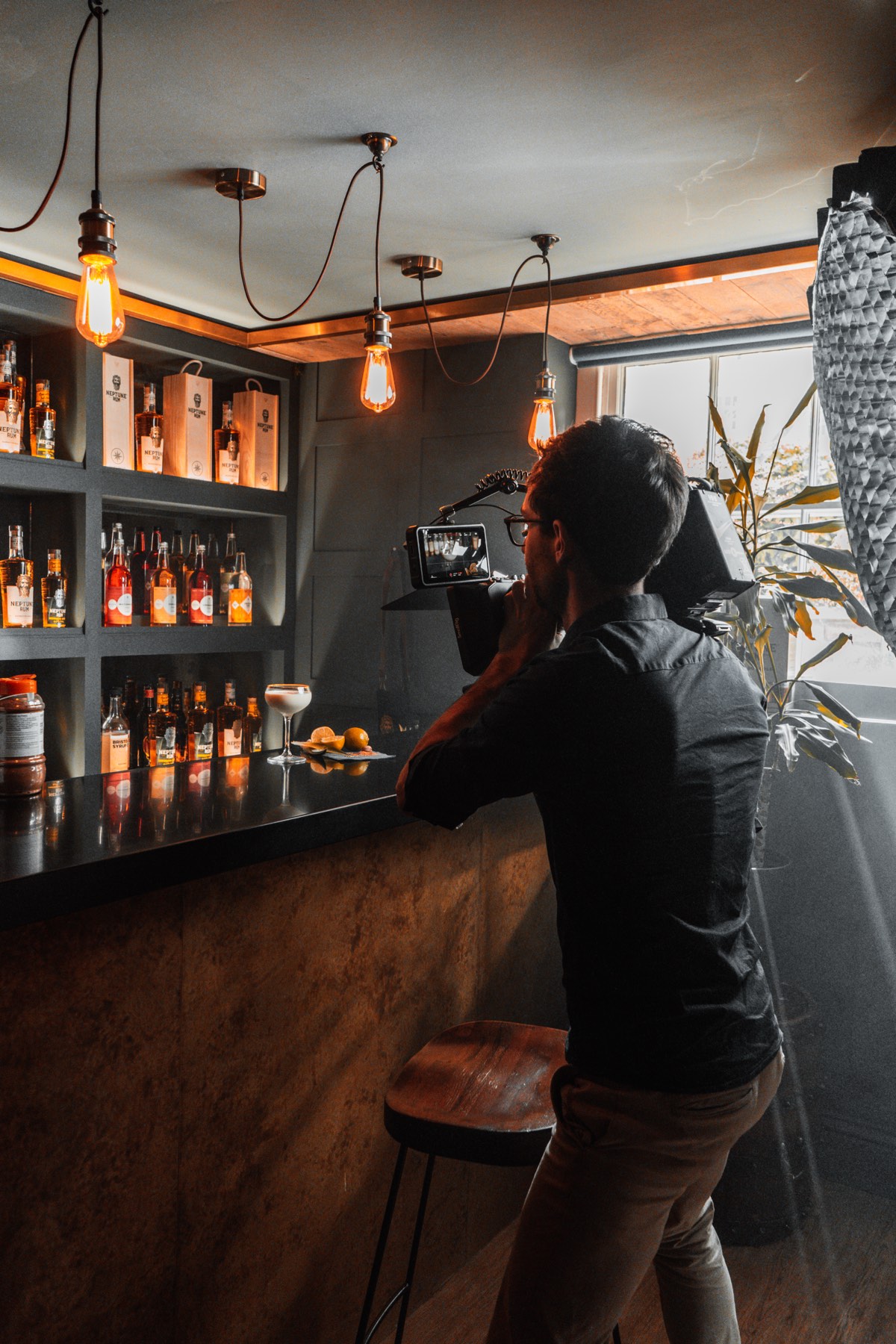
Restaurants are designed to be dim. That is the point. Low lighting creates intimacy, warmth, and atmosphere. It also creates a nightmare for video production if you do not know how to handle it. A camera that is not properly set up for low light will produce noisy, muddy footage that looks nothing like what the human eye sees in the room. The beautiful warm glow becomes an ugly orange smear.
My approach to restaurant and bar lighting is to enhance what is already there rather than replace it. I bring the venue's own atmosphere into the camera by supplementing with small, controllable LED units that can be hidden from view. A tiny LED panel tucked behind a menu stand to lift the shadows on a table. A warm-toned tube light placed along a bar back to add depth. A soft fill bounced off a ceiling to open up a face without flattening the mood. The goal is for the video to look like the restaurant feels, not like a film set.
Hotels present a different challenge. Bedrooms often have large windows, which means mixed lighting: daylight from outside and tungsten from the lamps inside. If you expose for the window, the room goes dark. If you expose for the room, the window blows out to white. I handle this with a combination of ND filtration, supplemental interior lighting to bring the room closer to the window brightness, and sometimes shooting at times of day when the light balance is naturally more favourable. Dawn and dusk are ideal because the exterior light is warm and low, which matches the interior lighting.
Food and drink on camera
There is a reason food photography and food videography are specialist disciplines. Food looks easy to shoot and is actually one of the hardest subjects to get right. Colour accuracy matters enormously. A steak that looks slightly grey instead of deep brown is appetising in person and repellent on screen. Greens that are oversaturated look artificial. Sauces that photograph as dark puddles lose all their appeal.
I shoot food with controlled side lighting, usually a soft source at about 45 degrees to the plate with a reflector on the opposite side to open up the shadows. This creates dimension and texture. The sauce glistens. The crust on the bread catches the light. The herbs look fresh and three-dimensional instead of flat. Backlighting works well for drinks, steam, and anything translucent. Front lighting makes everything look like a canteen.
Timing is critical. Food has a window of about five to ten minutes where it looks its best on camera. After that, salads wilt, sauces congeal, ice melts, foam settles. The kitchen needs to know when I am ready to shoot so the dish arrives at the moment the camera is rolling. This coordination with the kitchen team is something I always discuss in advance. A head chef who understands the timing of a food shoot is worth their weight in gold.
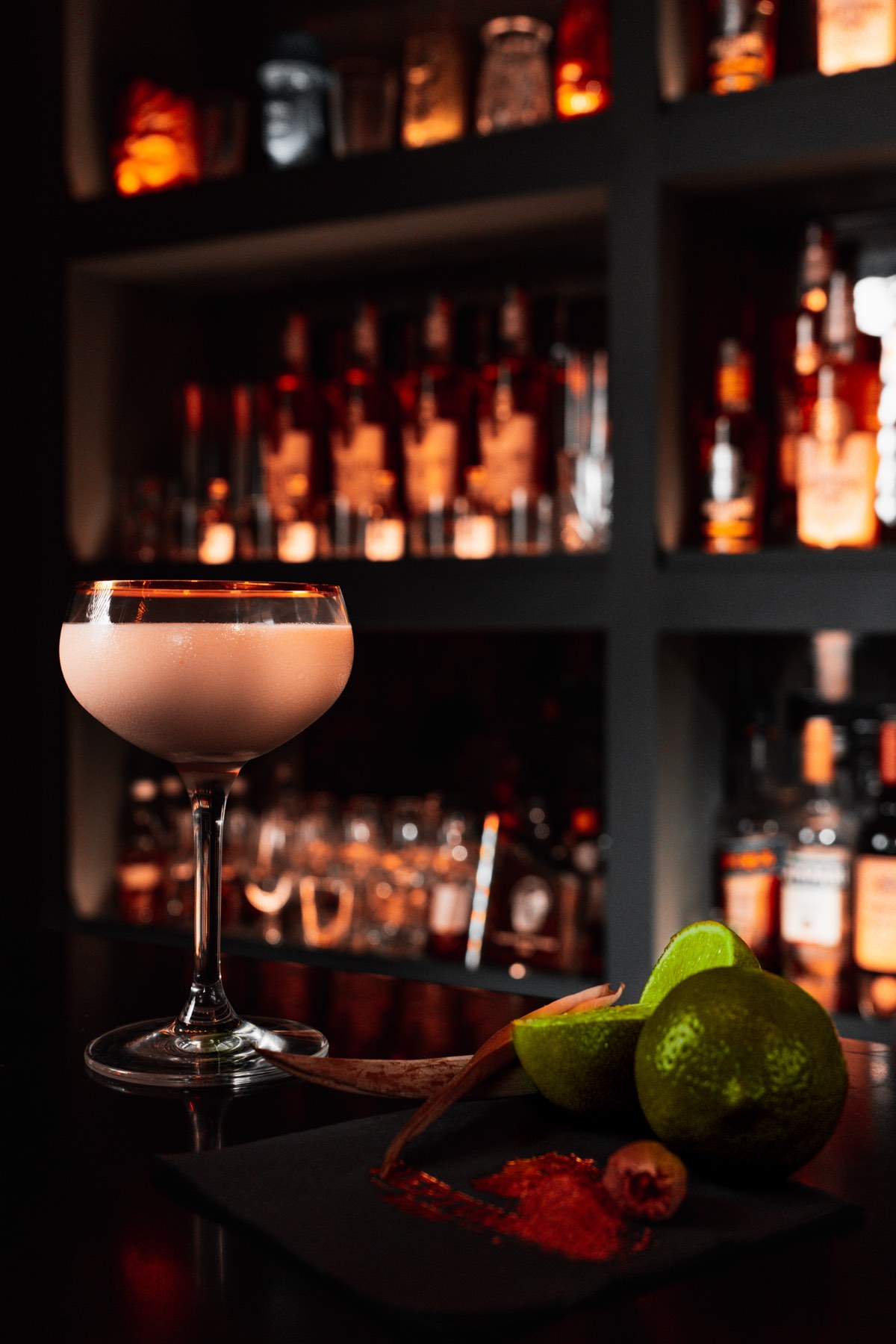
For drinks, I keep the glass cold and the pour slow. A cold glass produces condensation, which looks beautiful on camera. A slow pour gives me time to capture the movement, the colour, the head forming. Rush it and you get a glass of liquid. Slow it down and you get a moment.
Drone work for hotels and resorts
An aerial perspective is almost mandatory for hotels and resorts with any kind of grounds, views, or landscape setting. A drone shot of a country hotel surrounded by rolling hills, or a coastal resort with the sea behind it, communicates location and scale in a way that ground-level footage simply cannot. It places the property in its environment and gives the viewer a sense of what it would feel like to arrive.
The best approach is to combine drone and ground-level footage in a single film. Open with the aerial establishing shot, then transition to ground level as if the viewer is arriving. Through the entrance, into the lobby, down the corridor, into the room. This gives the film a natural narrative progression: I am coming to this place, and this is what I will find when I get there.
For rural hotels and resorts, seasonal drone footage is particularly valuable. The same property looks completely different in summer and winter, and having both versions allows you to market the property year-round with imagery that matches what guests will actually experience when they visit. A hotel marketing summer stays with footage shot in autumn looks dishonest. Seasonal accuracy builds trust.
Seasonal content strategy for hospitality
Hospitality is inherently seasonal, and your video content should reflect that. A restaurant's summer menu looks and feels different from its winter menu. A hotel's Christmas offering is a different product from its summer one. Using the same video year-round means at least half the year your marketing materials do not match reality.
I recommend hospitality clients plan four shoot days per year, one per season, to build a rolling library of current content. Each shoot day produces:
- A seasonal hero video for the website homepage (60 to 90 seconds, atmosphere-driven)
- Social media content (15 to 20 short clips and Reels optimised for Instagram and TikTok)
- Food and drink content reflecting the current menu
- Seasonal B-roll for the content library (exteriors, details, atmosphere shots)
This approach means your website and social channels always show what a guest will actually experience if they book today. It also means you are not trying to cram an entire year of content into a single shoot day, which inevitably produces generic footage that does not feel connected to any particular time of year.
Social vs website video for hospitality
These serve different purposes and need to be produced differently.
Website video sits on your homepage, your rooms page, your dining page, or your booking page. It is seen by people who have already found you and are deciding whether to book. This video needs to be polished, atmospheric, and aspirational. It should autoplay silently (with music available if the viewer unmutes) and load quickly. It does not need a narrative arc or a hook. The viewer is already there. They just need to feel what it would be like to stay.
Social video is competing for attention in a crowded feed. It needs a hook in the first second. It needs to be platform-native in format (vertical for Instagram and TikTok, potentially horizontal for YouTube). It should show the most visually striking element first: a dramatic pour, a beautifully plated dish, a sunset view from the terrace. Social video for hospitality can afford to be slightly less polished than website video because authenticity performs well on social platforms. A Reel that feels like you are seeing the place through a guest's eyes can outperform a highly produced piece that feels like an advert.
The behind-the-scenes angle is particularly effective for hospitality social content. The kitchen during service. The bar team preparing for the evening. The housekeeping staff making a room perfect. People love seeing the craft that goes into hospitality, and it humanises your brand in a way that only showing the finished product does not.
What to budget for hospitality video
A single shoot day for a hotel or restaurant will typically produce enough footage for a website hero video, a selection of social clips, and a library of B-roll that you can use across your marketing for the next three to six months. At my day rate, that is a manageable investment for any hospitality business, and the content works across multiple channels.
For larger hospitality groups, hotel chains, or tourism boards with multiple properties, Singularity Film produces multi-property video campaigns with consistent quality and branding across locations. For individual hotels, restaurants, bars, and tourism businesses, get in touch directly and we can plan something specific to your property.
The one thing I would advise against is waiting until you have a big budget. A single well-planned shoot day with good lighting and a clear brief will produce better results than spending months trying to find the budget for a large-scale production. Start with what you can do now. The hotel is already beautiful. The food is already good. You just need someone to capture it properly.
Related
- Social media video vs brand film
- What makes a great videographer
- Video content strategy for businesses
Hospitality video that books rooms
Atmosphere-driven content for hotels, restaurants, and tourism businesses.
Get in touch