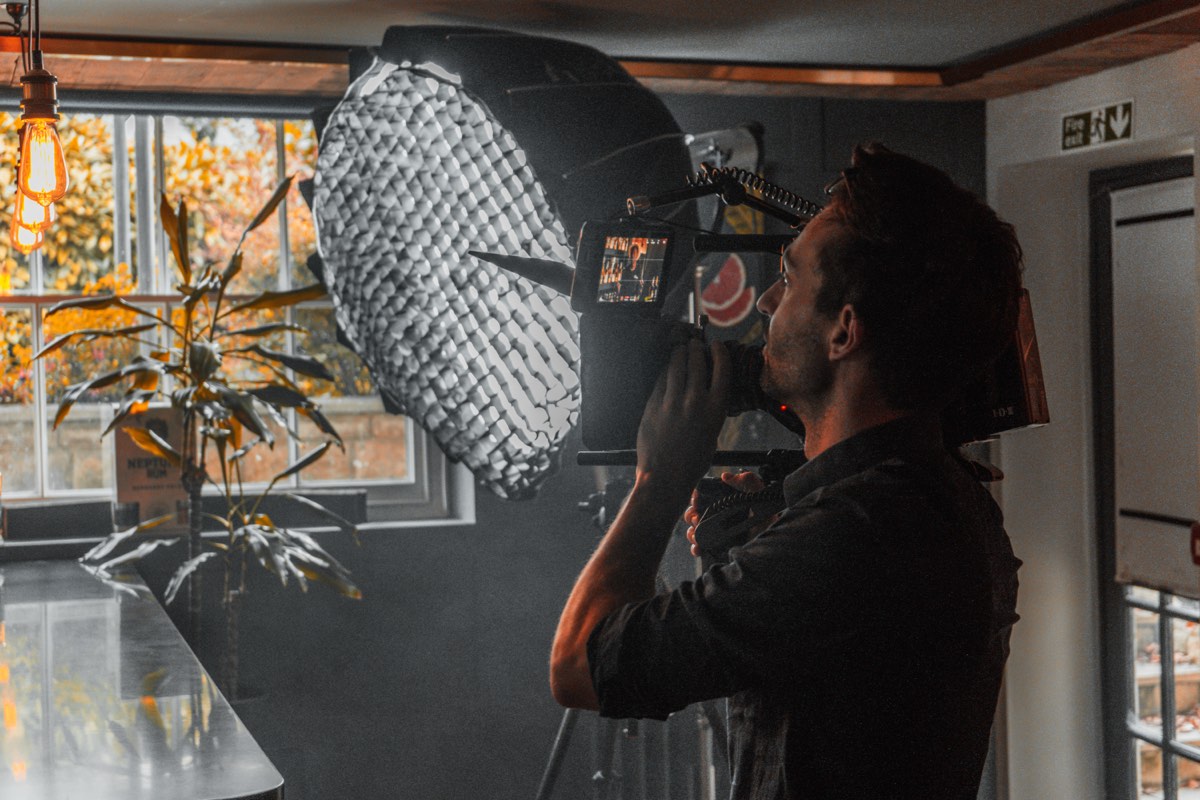
The first question I get asked on almost every shoot is "what camera is that?" The question I almost never get asked is "what lights did you bring?" This tells me everything about the gap between what people think makes video look good and what actually makes video look good.
I shoot on a Blackmagic URSA 12K. It is a serious cinema camera with a large sensor, incredible colour science, and resolution that exceeds what most projects will ever need. I love it. But if you forced me to choose between showing up to a shoot with just the camera and no lights, or just the lights and a phone, I would take the lights and the phone. And the footage would look better for it.
That is not a hypothetical. It is a demonstrable fact. And understanding why is the key to understanding what separates professional video from amateur video.
The phone test
Picture a standard office. Fluorescent tubes overhead, a window on one side, a grey carpet, white walls. Sit someone in a chair and film them on a phone. The footage looks like what it is: a person in an office, flat lighting from above casting shadows under their eyes, a window blowing out to white on one side, everything evenly and unflatteringly illuminated.
Now take that same office. Turn off the overhead fluorescents. Set up a large softbox at 45 degrees to the subject, about two metres away and slightly above eye level. Add a smaller fill light on the opposite side, dialled down to about a third of the key light's intensity. Place a backlight behind and above the subject, aimed at their shoulders and the edge of their hair to separate them from the background. Close the blinds or add a diffusion panel to the window to control any daylight spill.
Film that on the same phone. The difference is staggering. The subject has depth and dimension. Their face is sculpted with light rather than flattened by it. The background falls into a natural gradient. The image has mood. It has intention. It looks like someone made a deliberate choice about every element in the frame.
The camera did not change. The lens did not change. The subject did not change. The light changed. And with it, everything changed.
The difference between "bright enough" and "cinematically lit"
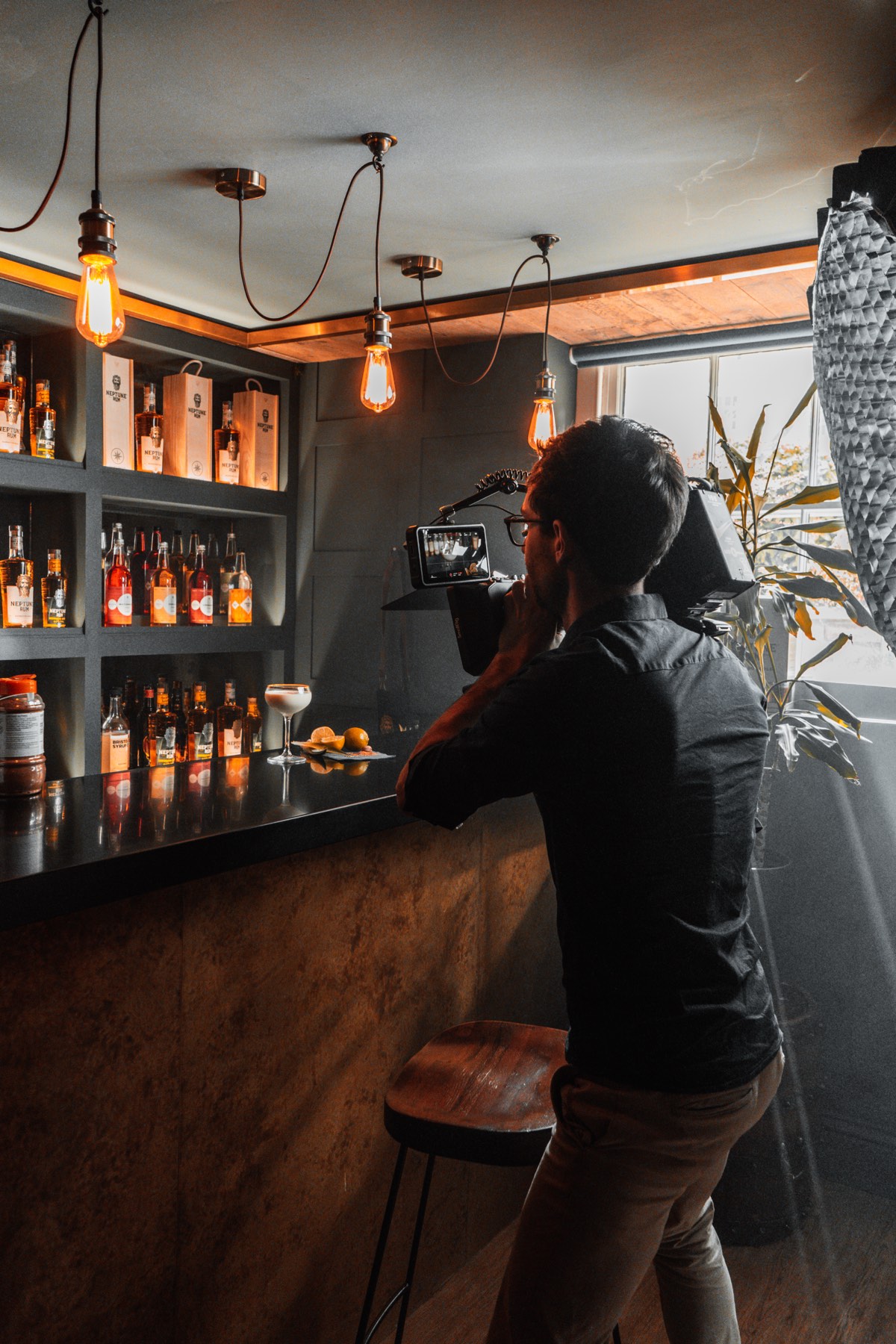
Most spaces where corporate and commercial video gets shot have enough light to see. The lights are on, there is a window, the camera can expose properly. Many people assume that means the lighting is fine. It is not. There is a vast difference between having enough light for the sensor to record an image and having the right light to make that image look intentional.
"Bright enough" means the camera can see. "Cinematically lit" means the light is doing work. It is shaping the subject, creating contrast, directing the viewer's eye, establishing mood, and separating foreground from background. These are active choices, not accidents.
Think about a film you love. Any film. The lighting in every scene was placed deliberately. Every shadow, every pool of light, every highlight on an actor's face was put there on purpose by a gaffer and a director of photography who spent hours setting it up. That is what makes the image feel real and alive, even though it is entirely constructed. The irony is that natural-looking light on screen is almost never actually natural. It is manufactured to look natural.
Key, fill, and back: the basics
Professional lighting follows a structure. You do not need to memorise the theory, but understanding the basics will help you appreciate what is happening when a videographer sets up lights on your shoot.
Key light. This is the primary light source. It provides the main illumination for the subject and establishes the direction of the light. Where you place the key light determines the shadow pattern on the face. A key light at 45 degrees creates a classic, flattering look. A key light directly to the side creates a dramatic, split-lit look with half the face in shadow. The key light is doing most of the heavy lifting.
Fill light. This is a softer, less intense light placed on the opposite side of the key. Its job is to control how deep the shadows are. A strong fill light reduces contrast and makes the image feel open and friendly. A weak fill light or no fill at all increases contrast and makes the image feel moody and dramatic. The ratio between key and fill is one of the most important creative decisions in lighting.
Back light. Also called a hair light, rim light, or kicker, depending on its exact position and purpose. This light sits behind and above the subject, aimed at the back of their head and shoulders. It creates a thin line of light around the edge of the subject that separates them from the background. Without it, the subject can blend into the background, especially if they are wearing dark clothing against a dark wall. With it, the subject has depth and the image has layers.
These three lights are the foundation. On top of this, you might add background lights, practical lights (lamps or fixtures visible in the frame), or accent lights to highlight specific elements. But the three-point setup is where everything starts.
How lighting creates mood and directs attention
Light is the primary tool for telling the viewer where to look and how to feel. This is not abstract. It is mechanical.
The eye is drawn to the brightest part of the frame. If you light your subject's face to be brighter than everything else in the shot, the viewer looks at their face. If the background is equally bright, the viewer's eye wanders. Professional lighting uses this principle constantly to control attention.
Colour temperature affects mood. Warm light (around 3200K, the colour of tungsten bulbs) feels intimate, comfortable, domestic. Cool light (around 5600K, the colour of daylight) feels clean, modern, neutral. Mixing the two deliberately can create visual tension or interest. A subject lit with warm light against a window casting cool daylight creates a separation that feels natural and cinematic.
Hard light (small source, sharp shadows) feels intense, dramatic, confrontational. Soft light (large source, diffused, gradual shadows) feels gentle, approachable, flattering. The choice between hard and soft light should be driven by the emotion you want the viewer to experience, not by what equipment happens to be available.
The same scene, lit two different ways
Imagine you are filming a CEO talking about the future of their company. Same person, same desk, same room. Two completely different lighting setups.
Setup one: corporate and confident. A large softbox key light at 45 degrees, creating soft, even illumination. A fill light on the other side, dialled up to reduce shadows. The background is evenly lit with a blue-white tone. The overall feeling is clean, professional, trustworthy. This is the lighting you see in most corporate communications. It says: we are organised, competent, approachable.
Setup two: visionary and dramatic. A smaller, harder key light at a steeper angle, creating defined shadows on one side of the face. No fill light at all, letting the shadows go deep. A warm backlight creating a rim around the subject's head. The background is dark with a single pool of warm light behind the subject. The overall feeling is cinematic, thoughtful, intense. This is the lighting you see in documentary films and brand films that want to convey weight and substance. It says: this person has something important to say.
Neither setup is better than the other. They serve different purposes. But neither happens by accident. Both require a deliberate plan, specific equipment, and time to set up. A videographer who does not carry lights cannot offer you either option. They are limited to whatever the room provides, and rooms rarely provide anything interesting.
Practical vs studio lighting
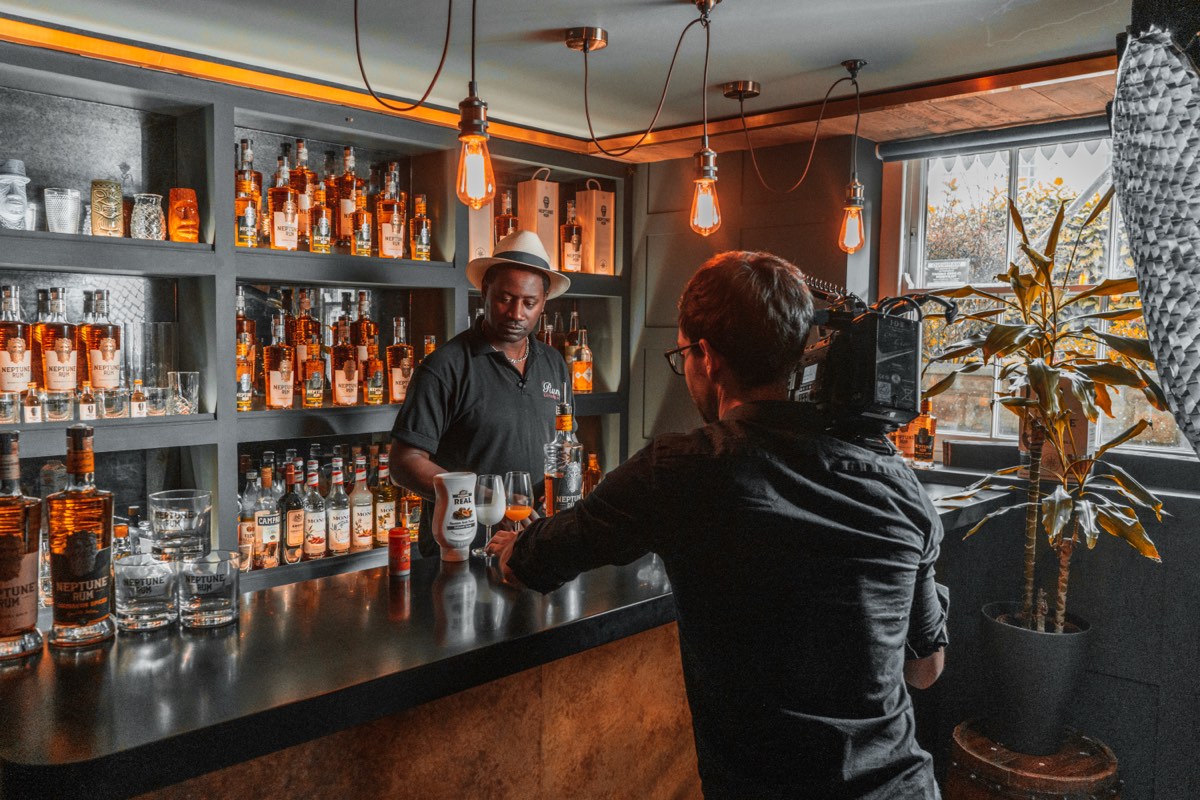
Not every shoot happens in a controlled environment. Sometimes you are filming in a client's office, a factory, a restaurant, or outdoors. In these situations, you are working with practical lighting: the lights that already exist in the space, plus whatever you bring to supplement them.
The skill in practical lighting is integration. You need your added lights to blend with the existing light so the result looks natural rather than like a TV studio was assembled in someone's kitchen. This often means matching the colour temperature of your lights to the room's fixtures, using diffusion to soften your added light so it does not create hard shadows that contrast with the soft ambient light, and positioning your lights where they could plausibly exist as real light sources.
A well-lit practical setup looks like the room just happens to have beautiful light. It does not draw attention to itself. The viewer does not notice the lighting. They just notice that the person looks good, the space feels inviting, and the image has a quality they cannot quite identify but that makes them take it seriously.
Why videographers who don't carry lights are leaving quality on the table
There is a category of videographer who works with available light only. Sometimes this is a creative choice for documentary or run-and-gun work where carrying lights is impractical. That is legitimate. But often it is a cost or convenience decision: lights are heavy, they take time to set up, and they add expense to the kit.
The problem is that most real-world locations have terrible light for video. Office fluorescents are unflattering and have a green colour cast. Windows create uncontrollable contrast that changes throughout the day. Restaurants and bars are too dark. Conference rooms are evenly lit with no direction or shape. Without the ability to add, modify, or control light, you are at the mercy of whatever the building provides.
I carry a full Aperture lighting package on every shoot: three 300W LEDs, a 600W, a 1200W, Fresnel and spot units with gobos, LED panels, tubes, softboxes, flags, and diffusion. It fills a significant portion of my vehicle. Setting it up takes time. But the difference in the final output is not incremental. It is categorical. The footage looks professional because the light was controlled. Every time.
My lighting package comes included in the day rate. There is no separate hire fee, no minimum charge on the larger units. The lights turn up because they should always be there.
LED vs tungsten in 2026
The lighting industry has shifted overwhelmingly to LED over the past decade, and for good reason. Modern LED fixtures are lighter, cooler, more energy-efficient, and tuneable across a wide range of colour temperatures and even colours. A single LED panel can switch from warm tungsten to cool daylight at the turn of a dial, and many can produce any colour in the spectrum for creative effects.
Tungsten lights still have their advocates. The quality of light from a tungsten filament is genuinely beautiful, with a smooth, continuous spectrum that LEDs approximate but do not perfectly replicate. Some cinematographers prefer the way tungsten light renders skin tones, and there is a warmth and character to it that is difficult to quantify.
For practical commercial and corporate work in 2026, LED is the standard. The advantages in terms of heat management (tungsten fixtures are extremely hot, which matters in small rooms), power consumption (you can run more LEDs on a standard domestic circuit), and flexibility (instant colour temperature changes between setups) outweigh the marginal quality advantage of tungsten for most applications. I use LED almost exclusively now, and the results speak for themselves.
What this means for you as a client
If you are commissioning video for your business, the practical takeaway from all of this is straightforward: when you are evaluating videographers, ask about their lighting setup. Look at their portfolio and pay attention to how the people and spaces look, not just the camera movement and editing. Notice whether the lighting has intention or whether it looks like whatever the room provided.
A videographer who invests in lighting and knows how to use it will produce footage that looks professional regardless of the camera body they are using. A videographer who shoots on the best camera in the world but brings no lights will produce footage that looks like it was shot in an office. Because it was.
The camera captures what is in front of it. The lights determine what that looks like. Choose your videographer accordingly.
If you want to discuss a project where lighting is going to make the difference, get in touch. For larger productions with complex lighting requirements across multiple locations, Singularity Film manages that scale of work.
Related
- How to light a corporate interview
- Best camera and lighting for corporate interviews
- Camera operator services
Need properly lit video?
Full Aperture lighting package on every shoot. No separate hire fees.
Get in touch